

Malone Era At UNC Launches Amid NCAA’s Quick-Fix Rules
By David Glenn
It’s going to happen.
It’s only a matter of time.
One of these years, a first-time college head coach is going to lead his team to the NCAA championship in men’s basketball, and this time the feat isn’t going to require an asterisk.
For now, at least, Steve Fisher is the only correct answer to this unique trivia question — the 1989 Michigan Wolverines, led by Fisher (then a rookie head coach), did capture the NCAA title — but even he didn’t coach his first college team from start to finish.
Fisher’s story is almost unbelievable even 37 years later. Yes, he led Michigan to six straight NCAA Tournament wins and cut down the nets in 1989. But, no, he wasn’t the Wolverines’ full-time head coach that year. Instead, he was a shocking, break-glass-in-case-of-emergency, late-season replacement for the head coach who had launched the squad’s 1988-89 campaign.
The 1989 Wolverines, led by future NBA first-round picks Glen Rice, Rumeal Robinson, Loy Vaught and Terry Mills (fellow star Sean Higgins became a second-round pick), were a #3 seed in the NCAA Tournament that year. During the regular season, they regularly were ranked in the national top 10.
In a bizarre turn of events, two days before Michigan’s first game in the Big Dance, Wolverines athletic director Bo Schembechler (also the school’s football coach at the time) fired head coach Bill Frieder. Earlier that same week, Frieder had visited Arizona State and accepted an offer to take over the Sun Devils’ program after completing the ongoing season at UM.
Famously, while firing Frieder, Schembechler said, “A Michigan man is going to coach Michigan.” (That was unintentionally funny, because Frieder is a Michigan graduate, and Fisher is not.) Clearly insulted that Frieder would have a wandering eye on the cusp of the NCAA Tournament, Schembechler elevated Fisher, a top assistant, to the head coach’s chair.
Fisher, of course, then became eternally famous for making the best possible use of an emergency/interim appointment, leading Michigan to six straight victories (including over UNC in the Sweet 16, then Virginia in the Elite Eight) and the national championship.
Since the creation of the NCAA Tournament way back in 1939, Fisher remains the only example (asterisk included) of a first-time college coach winning the national championship.
It’s still too early to know if newly hired North Carolina coach Michael Malone, who led the Denver Nuggets to the NBA title in 2023, might be a legitimate candidate to join this exclusive college club.
The 2026-27 season will be Malone’s maiden voyage as a college head coach, but his first roster with the Tar Heels remains in flux, to say the least.
Although this Carolina basketball snapshot is expected to change almost daily in the coming weeks, Malone has solidified only five of his 15 roster spots for next season.
Forward Jarin Stevenson and guard Jaydon Young will be returning seniors for the Tar Heels in 2026-27. Forward Maximo Adams (a McDonald’s All-American) and guard Malloy Smith (son of legendary UNC point guard and Turner Sports analyst Kenny Smith) will be incoming freshmen. Virginia Tech guard Neo Avdalas, an NBA prospect from Greece who had an up-and-down NCAA debut last season with the Hokies, is Malone’s only addition from the transfer portal thus far.
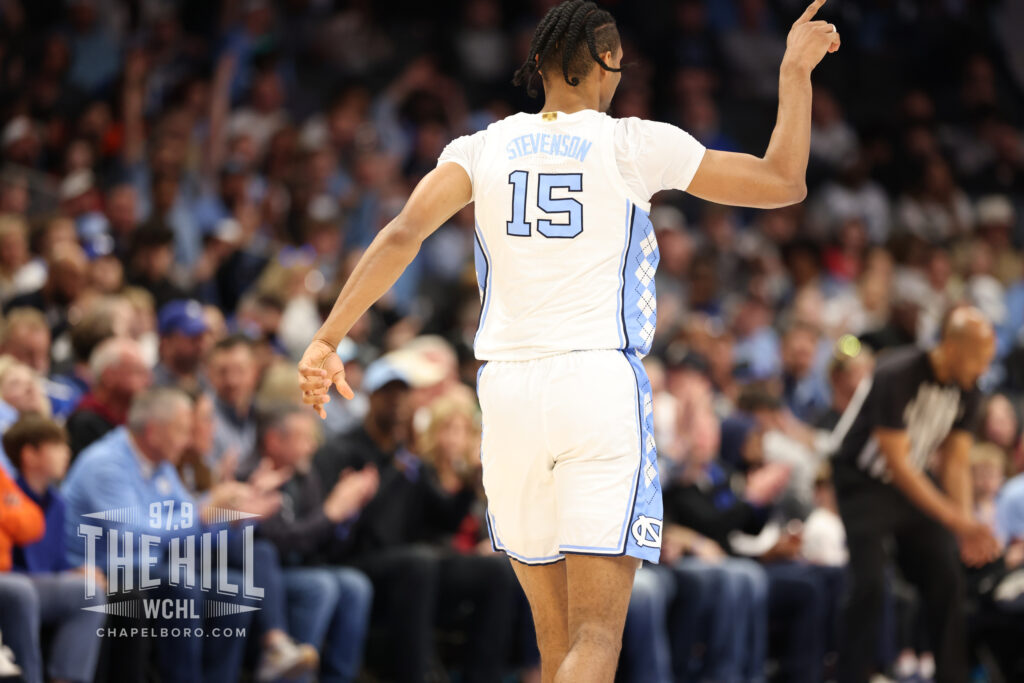
UNC basketball, Jarin Stevenson (photo via Todd Melet)
What is already crystal-clear, though, is that Malone is returning to college basketball at a time when the sport is governed by an entirely different set of rules than those he experienced as a college assistant coach (at Oakland, Providence and Manhattan) from 1994-2001, just before he made his jump to the NBA.
Thanks to the creation of the NCAA transfer portal (2018), the arrival of Name-Image-Likeness money in college sports (2021), the dramatic expansion of immediately eligible major college transfers (recent/gradual) and most recently the debut of revenue-sharing with NCAA athletes (2025), college coaches have a much better chance of making major impacts very quickly.
For decades, one ongoing and undeniable narrative in college basketball included the fact that even the greatest coaches typically took a long time to reach the sport’s promised land.
Legendary Duke coach Mike Krzyzewski didn’t win his first NCAA title, for example, until his 16th season as a college head coach and his 11th season with the Blue Devils.
UNC’s Dean Smith, another Mount Rushmore-caliber leader, didn’t capture his first college crown until his 21st season in the head coaching ranks, all with the Tar Heels.
There were similar stories for Syracuse’s Jim Boeheim (27th season as college head coach), UConn’s Jim Calhoun (27th), Arizona’s Lute Olson (24th), Maryland’s Gary Williams (24th), NC State’s Norm Sloan (22nd), UNLV’s Jerry Tarkanian (22nd), Villanova’s Jay Wright (22nd), Kentucky’s John Calipari (20th) … even UCLA’s John Wooden (18th), UNC’s Roy Williams (17th), Kansas’ Bill Self (16th) and Kentucky’s Rick Pitino (14th).
Under the revised NCAA rules, which enable much quicker roster-building and more extreme program reversals, when coach Dusty May led Michigan to the 2026 NCAA title, that feat came in just his second season with the Wolverines and just his eighth year as a college head coach.
Similarly, in 2025, coach Todd Golden led Florida to the NCAA crown in just his third season with the Gators and just his sixth year as a college head coach.
Interestingly, from UNC’s perspective at least, the three other most recent examples — beyond Fisher in 1989 — of first-time college head coaches generating elite postseason performances came from members of the Carolina Basketball Family.
In 1980, Larry Brown (a former UNC player and assistant coach) led UCLA to the national championship game in his college head coaching debut.
In 1998, Bill Guthridge (Smith’s right-hand man for decades) led UNC to the Final Four in his first campaign as the Tar Heels’ top decision-maker.
In 2022, of course, Hubert Davis (who played for Smith and coached under Williams) led UNC to the national championship game in his head coaching debut.
Could Malone have something similar in store for Carolina fans next season?
Perhaps that’s asking too much, especially with so many roster dominoes still to fall.
At the very least, though, first-time college head coaches — and all new coaches, for that matter — have a much better chance of making a positive first-year splash than they did even a half-dozen years ago, and that could mean very good news for the Tar Heels.
 David Glenn (DavidGlennShow.com, @DavidGlennShow) is an award-winning author, broadcaster, editor, entrepreneur, publisher, speaker, writer and university lecturer (now at UNC Wilmington) who has covered sports in North Carolina since 1987.
Chapelboro.com does not charge subscription fees, and you can directly support our efforts in local journalism here. Want more of what you see on Chapelboro? Let us bring free local news and community information to you by signing up for our newsletter.

