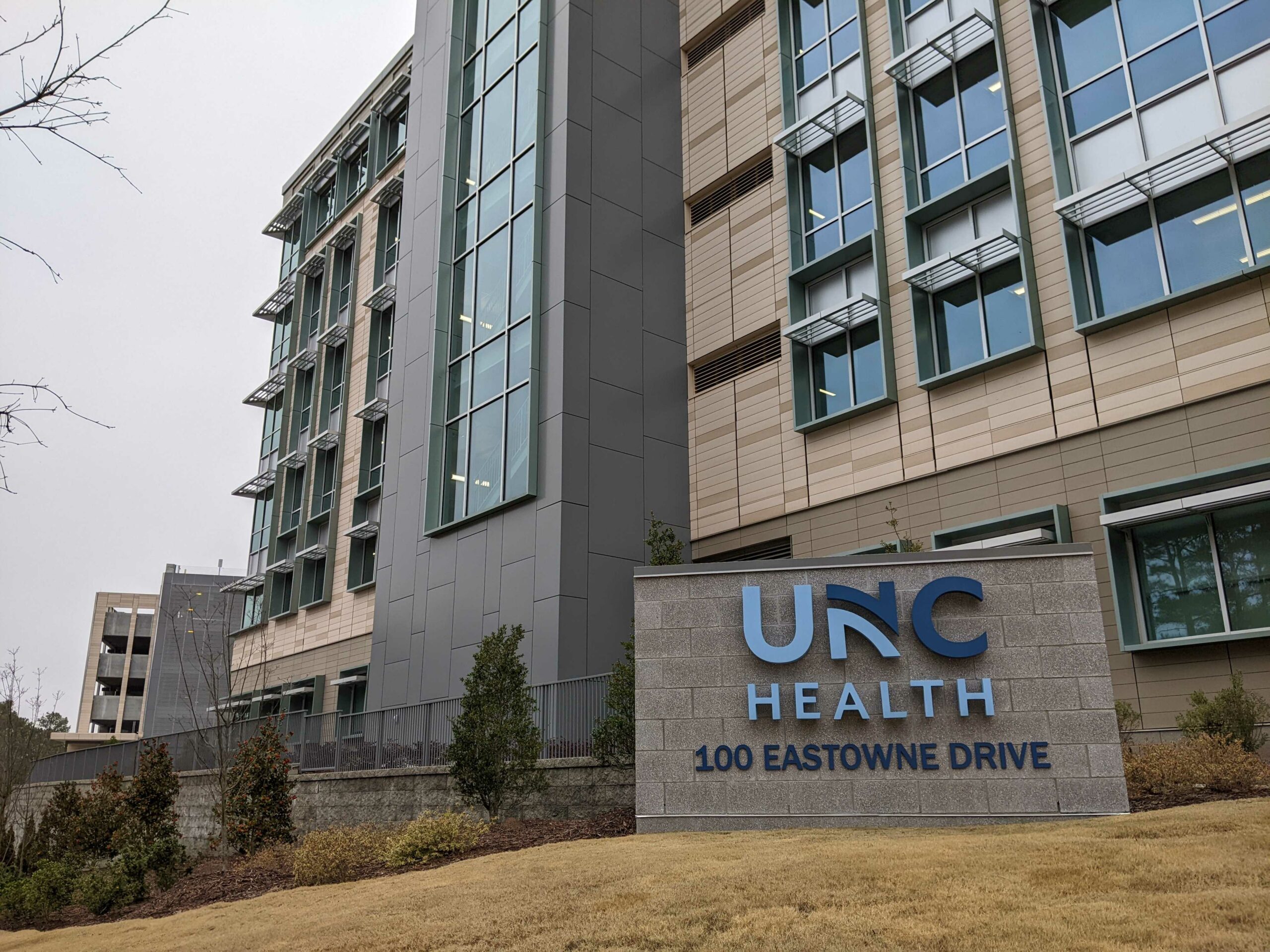
Administrative mistakes and a lack of expertise caused delays in North Carolina’s spending of federal funds for Hurricane Matthew recovery, according to a report released Monday from the General Assembly’s government watchdog agency.
The non-partisan Program Evaluation Division also found $3.7 million in unnecessary state spending.
The U.S. Department of Housing and Urban Development announced a federal community block grant of $199 million for the state in December 2016, which was later increased to $237 million in August 2017. But as of December 2018 — over two years after Matthew made landfall — the state had only spent 1%, or $3.4 million, of those funds, according to the report. By comparison, South Carolina spent 22% of its award for Matthew recovery in the same time period.
Following Matthew, many legislators in the eastern part of the state have questioned slow hurricane recovery fund distribution. They raised concerns that the same trend could hold true for recovery funds for Hurricane Florence, which brought record rains and flooding to the state in September.
North Carolina has been considered a slow spender by HUD, and as of this March, the state has spent a total of 3.1% of block grant funds – the slowest spending of any state or federal funds, according to the report’s lead researcher.
The community block grants were only a portion of the total federal money that North Carolina received for Hurricane Matthew recovery. Four other federal programs awarded an additional $667.7 million.
The delays, the review said, were caused by a lack of institutional knowledge about Community Development Block Grant-Disaster Recovery funds, intended as last resort spending for long-term housing and infrastructure recovery. Before Matthew, the state had not received this type of funding since 2003. As a result of inexperience, the report said, the state didn’t meet grant requirements, forcing it to re-bid its contract and spend $3.7 million in state funds to cover costs that could’ve been paid with federal funds. The report also says the state missed opportunities to fully leverage federal funds.
After initial missteps, the state created the North Carolina Office of Recovery and Response in October 2018 to coordinate recovery efforts. Recovery and Response Office employees are required to be knowledgeable about housing programs such as the CDBG-DR program, but the report notes that these positions are time-limited, set to be dissolved in 2022, which “puts the state at risk of encountering similar problems in recovering from future disasters.”
In response, lawmakers have drafted a disaster recovery bill based directly on the four recommendations given in the report, one of which is to maintain permanent recovery and response positions for future disaster recovery efforts. The committee will vote on recommending the draft bill to the General Assembly next month.
At a Joint Legislative Program Evaluation Oversight Committee meeting on Monday, Republican committee co-chairman Rep. Craig Horn acknowledged that hurricane survivors may feel stuck while waiting to get recovery money. He called the process “overcomplicated” and expressed hope that by having one office handle all recovery efforts, it could be simplified.
“We’re all frustrated at getting help to people as quick as we can, but you’re forced to jump through a million hoops,” said Horn, a Union County Republican.
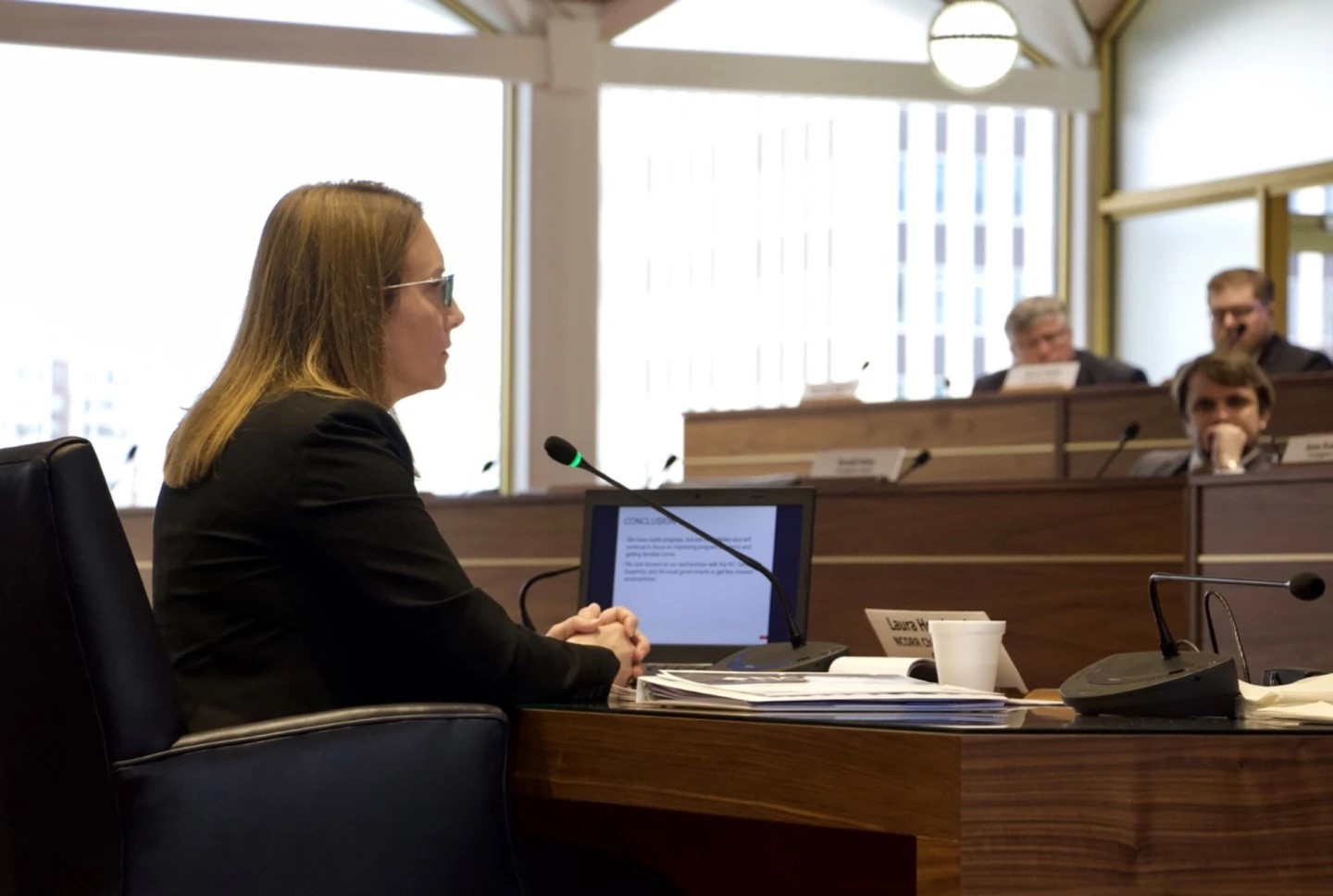
State recovery leaders disagreed with some of the report’s findings. Laura Hogshead, chief operating officer of the Office of Recovery and Resiliency, pushed back on criticism of the delayed timeline for distributing the funds, pointing out that the state had to wait nearly a year for HUD to approve North Carolina as a grantee for these funds.
“The first 311 days the state had literally no ability to access those funds,” she said.
Because of this, she said, it was unfair to compare North Carolina’s recovery spending with South Carolina, which had already established grantee status.
Hogshead also said the $3.7 million in state spending that the report said could have been paid for by federal funds, was being mischaracterized as “misspent” money.
“That money was not misspent. It was not reimbursed by HUD, but it was not misspent,” she said. “It did go to hurricane survivors.”
Related Stories
‹

North Carolina Official Overseeing Hurricane Rebuilding Efforts Is No Longer in RoleThe top North Carolina official for rebuilding efforts after natural disasters is no longer working in the position, the AP reports.

On the Porch: Dr. James Wood - Sports Around the WorldThis Week:
James Wood is currently Professor of Latin American and modern world history at North Carolina A&T State University. He is the author of The Society of Equality: Popular Republicanism and Democracy in Santiago de Chile, 1818-1851 and the co-editor of "Problems in Modern Latin American History: Sources and Interpretations", now in its fifth edition with Rowman and Littlefield. As a Fulbright scholar for Chile in 2016 he was a visiting professor at the Universidad Diego Portales in Santiago (where he observed Chilean student activism up close).

On the Porch: Bill Brown - Art and Science Merge at NCMAThis Week:
Bill Brown joined the North Carolina Museum of Art as a Conservation Intern in 1988. Thirty-two years later he retired from the Art Museum as Chief Conservator. He received his M.A. and Certificate of Advanced Studies in Conservation from State University College at Buffalo, NY in 1989. At the Museum, he established the Art + Science Initiative, a collaborative program with Duke University math and science departments. Bill has a passion for Italian Old Master Paintings of the 14th to 18th century. He works part-time as a conservator in private practice and provides conservation support for the Museum and Gallery collection of old master paintings at Bob Jones University in Greenville, SC . He enjoys retirement with his wife and young adult son.

On the Porch: Nora Gaskin - Conjuring Crime StoriesThis Week:
Author Nora Gaskin is a lifelong resident of the Durham-Chapel Hill area. Her latest is novel is "Lammie Loves Cubby". Nora has a bachelor’s degree in English with Honors in Creative Writing from UNC, and a Masters in English from the University of Washington in Seattle. She spent over 24 years as a stockbroker and financial advisor in the Durham office of a major investment firm. She retired in 2005 to focus on writing. She is the publisher at Lystra Books and Literary Services and the author of three novels and one nonfiction book. She lives and writes in Chatham County, inspired by her native landscape, her husband, and dogs. Her favorite word is "gratitude."
![]()
Therapy Smarts and Sen. Natalie Murdock on How HB696 Impacts Children and Families — On Air Today (June 15, 2026)Founder and CEO of Therapy Smarts Avani Shah and N.C. District 20 Sen. Natalie Murdock speak with 97.9 The Hill on Monday, June 15.

On the Porch: Steven Fenberg - What Funded America's Infrastructure?This Week:
Writer Steven Fenberg discovered Jesse Jones was reputedly the most powerful person in the nation next to President Franklin Roosevelt during the Great Depression and World War II. As chairman of the federal government’s Reconstruction Finance Corporation (RFC)—the nation’s indispensable infrastructure bank—Jones initiated and managed massive New Deal agencies that saved and expanded the nation’s economy and then shifted the RFC’s priority from domestic economics to global defense to fight and win WWII. Fenberg told this remarkable story as executive producer and co-writer of the Emmy Award winning documentary film “Brother, Can You Spare a Billion?” that was narrated by Walter Cronkite and broadcast nationally on PBS. Fenberg then wrote the biography “Unprecedented Power: Jesse Jones, Capitalism, and the Common Good.”

Viewpoints: Constitutional Changes Are Rarely NecessaryConstitutional amendments are supposed to be rare. They are supposed to matter. They are meant to alter foundational principles or governmental structure when absolutely necessary.

On the Porch: Terri Mitchell - Mentoring Women in TechThis Week:
Terri Mitchell is the founder of Accelerate Success, a program to help women develop the confidence, skills, and networks needed to thrive in STEM careers. She is a former IBM executive with more than 30 years of experience in the technology industry. Starting as a graduate of Le Moyne College with a degree in Computer Science, she held leadership roles across hardware, software, and systems businesses, culminating in her role as Vice President and IBM Integration Executive. Following her retirement from IBM in 2018, Terri became a founding member of Triangle Women in STEM and began the Accelerate Success program.

On the Porch: Carl Nordgren - Creativity Can Unite USThis Week:
Carl Nordgren is a best-selling novelist, a teacher, and an imaginal cell. After 25 years as an entrepreneur, he taught Creativity at Duke for 14 years. He’s a two-time TEDx speaker and hosts the weekly radio show ‘Exploring your Creative Genius’ on 97.9 The Hill. His calling is to help each of us and all of us grow our creative capacities and develop our entrepreneurial instincts and behaviors, a calling that informed his book "Becoming a Creative Genius (again)". His new book, "Common Ground for US" continues that work and offers new perspectives on governance and policy making for political and community leaders. You can attend his book launch event at Golden Fig Books in Carrboro on June 4, by clicking the show title above.

On the Porch: Tiffany Muller - End Citizens UnitedThis Week:
Tiffany Muller is the President of End Citizens United. She has helped grow the group into a nationwide organization with more than 4 million members and 1 million grassroots donors. Before leading End Citizens United, Tiffany was Deputy Political Director at the Democratic Senatorial Campaign Committee, where she worked with top Senate races. She also served as chief of staff to two members of Congress, ran a political research firm, and was Vice President of Political Operations at the LGBTQ+ Victory Fund. As a member of the Topeka City Council, she led successful efforts to expand anti-discrimination protections.
›