Written by GARY D. ROBERTSON
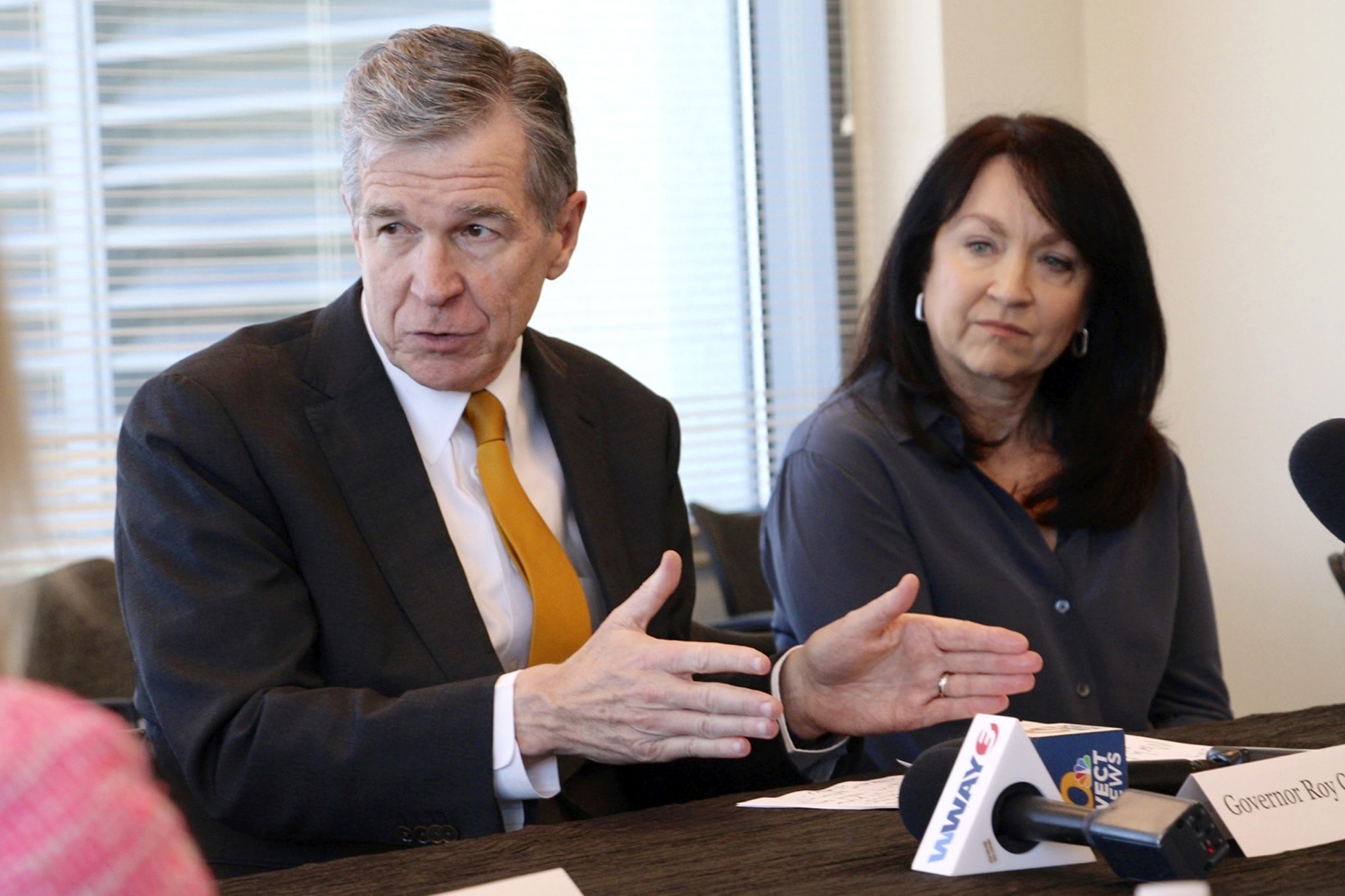
Democratic Gov. Roy Cooper vetoed on Friday another bill related to North Carolina charter schools that would ease enrollment growth caps and allow county commissioners to give them property tax proceeds for capital projects.
The measure, which received final legislative approval last week, also would allow charter schools to admit out-of-state students and let more categories of students attend while avoiding enrollment lotteries that are sometimes required.
Earlier this month, Cooper vetoed a measure that would transfer decision-making on approving new charter schools from the State Board of Education — where most panelists are picked by Cooper — to a charter review board in which Republican legislative leaders make most appointments.
Cooper’s veto message Friday focused on opposition to the growth limits and the capital spending. Current laws direct giving charter schools a per-pupil share of operating funds provided to local school boards, but counties don’t share capital funds with them.
“Diverting local resources to build charter schools without clear authority on who owns them risks financial loss to county taxpayers who have no recourse,” Cooper wrote.
As for enrollment growth, charter schools labeled as low-performing now can’t grow more than 20% in a year. Under the vetoed bill, these schools could ask the State Board of Education for permission to go beyond 20%. The bill also says charter schools that aren’t low-performing could set their enrollment each year as they wish. Currently, these schools can grow up to 30% annually on their own, with approval by the state board required for percentages above that.
“Allowing more students to attend failing charter schools risks their education and their future,” Cooper wrote. “The State Board of Education should continue to oversee the enrollment growth of charter schools to assure success.”
The bill now returns to the legislature, where the Republican bill received at least some Democratic support in each chamber, for a potential override. There it will sit with the proposed Charter School Review Board bill and four other measures that Cooper vetoed this month. The legislature isn’t expected to return to Raleigh for votes until early August.
Cooper’s vetoes this year on eight other bills have been overridden. All but one occurred since the GOP gained veto-proof majorities in both chambers in April.
Also Friday, Cooper signed two other bills and said he will let a bill addressing changes to the state retirement system become law without his signature.
Photo via AP Photo/Hannah Schoenbaum.
Related Stories
‹
North Carolina House Unlikely To Proceed With Education Overhaul, Speaker SaysWritten by HANNAH SCHOENBAUM A sweeping education proposal that would take away power from North Carolina superintendents and the State Board of Education, placing it in the hands of public school parents, is unlikely to advance this session, the House speaker said Thursday. The 26-page bill, introduced last week but pulled from a committee agenda, would […]
North Carolina Republicans Introduce Public Education Overhaul in Dwindling Days of SessionWritten by HANNAH SCHOENBAUM As the North Carolina legislative session winds down and budget negotiations plod along, House Republicans are pitching an eleventh-hour overhaul of public education laws that would take power away from superintendents and the State Board of Education while giving parents and lawmakers more control. Republican committee chairs pulled the proposal — introduced earlier […]
Cooper Lets Changes to NC Schools for Deaf, Blind Become LawWritten by GARY D. ROBERTSON Governance of the state’s public residential schools for the deaf and the blind is being shifted to new trustee boards controlled by General Assembly appointees in legislation that became law Monday because Gov. Roy Cooper neither signed nor vetoed it. The state constitution gave the Democratic governor until Sunday night to act […]
Cooper Nominates NC Education Board Leaders To Stay On PanelNorth Carolina Gov. Roy Cooper nominated on Thursday the current chairman and vice chairman of the State Board of Education to serve eight additional years on the panel. Eric Davis, the chairman since 2018, and Vice Chairman Alan Duncan were among four people that the governor asked the General Assembly to confirm for the board. […]
North Carolina Governor Vetoes Another Set of Bills, Including One on Guns in Private SchoolsGov. Josh Stein cleared his desk Wednesday of bills passed to him from the North Carolina General Assembly last month, vetoing three.
North Carolina Governor Vetoes Anti-DEI and Transgender Rights Bills, Calling Them ‘Mean-Spirited'North Carolina Democratic Gov. Josh Stein vetoed on Thursday three anti-DEI bills and another measure that in part would target transgender rights.
North Carolina Gov. Stein Vetoes Bill Repealing Interim Greenhouse Gas Reduction MandateNorth Carolina Gov. Josh Stein vetoed legislation Wednesday that in part would repeal an interim greenhouse gas reduction mandate set for Duke Energy's power generation.
North Carolina’s Next Governor Could Have a More Potent Veto With Even a Small Democratic GainNorth Carolina Democratic Gov.-elect Josh Stein's veto could become more effective, should the margin hold for their party.
Vaping Regulations, DMV Changes Among Bills Signed by North Carolina Gov. Roy CooperNorth Carolina Gov. Roy Cooper signed four bills Wednesday, including one that creates a new registry for vaping products.
North Carolina Governor Roy Cooper Vetoes First Bill of 2024 Legislative SessionIn his first veto of 2024, North Carolina Gov. Roy Cooper blocked a bill that would allow more trees to be cut back in favor of billboards.
›