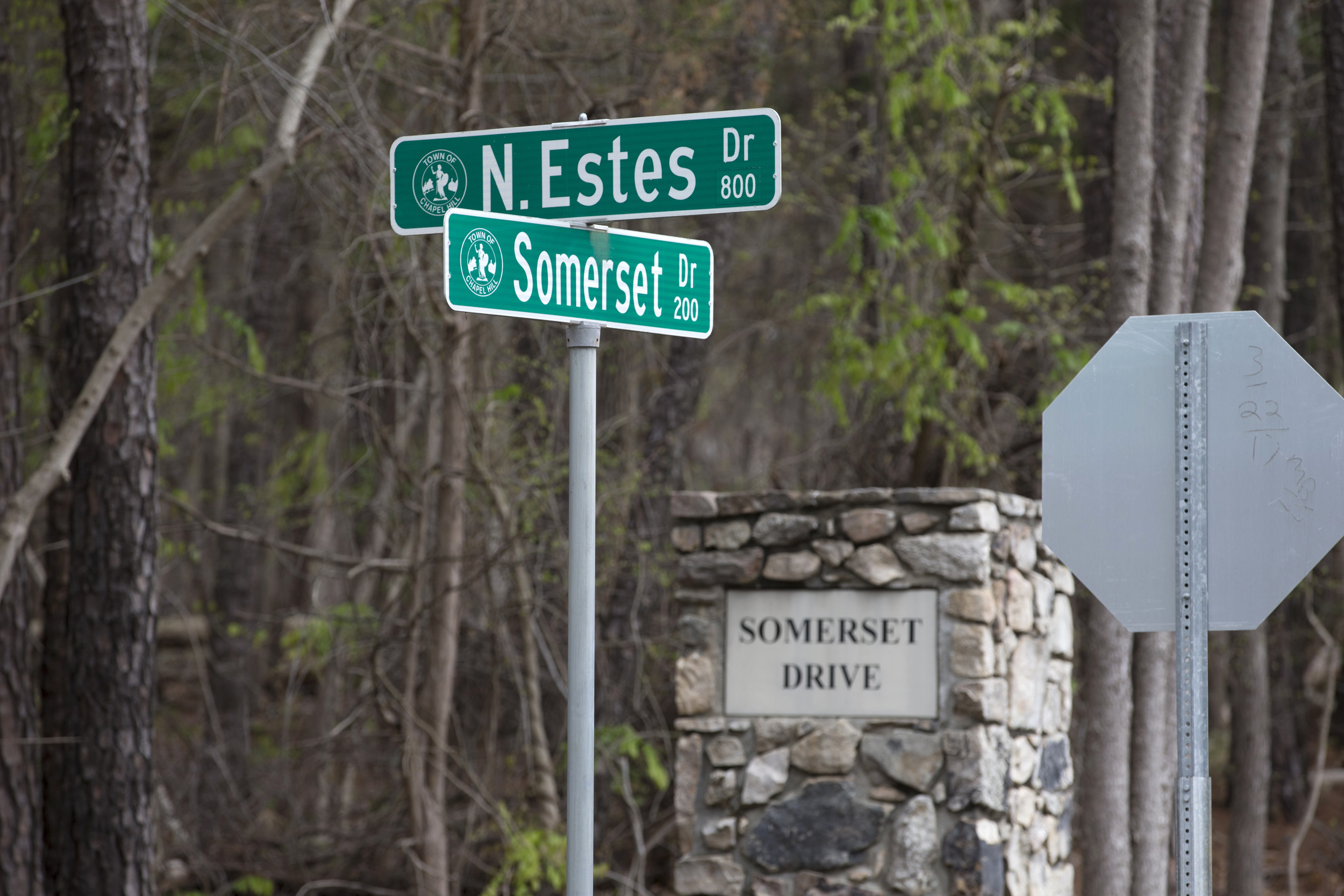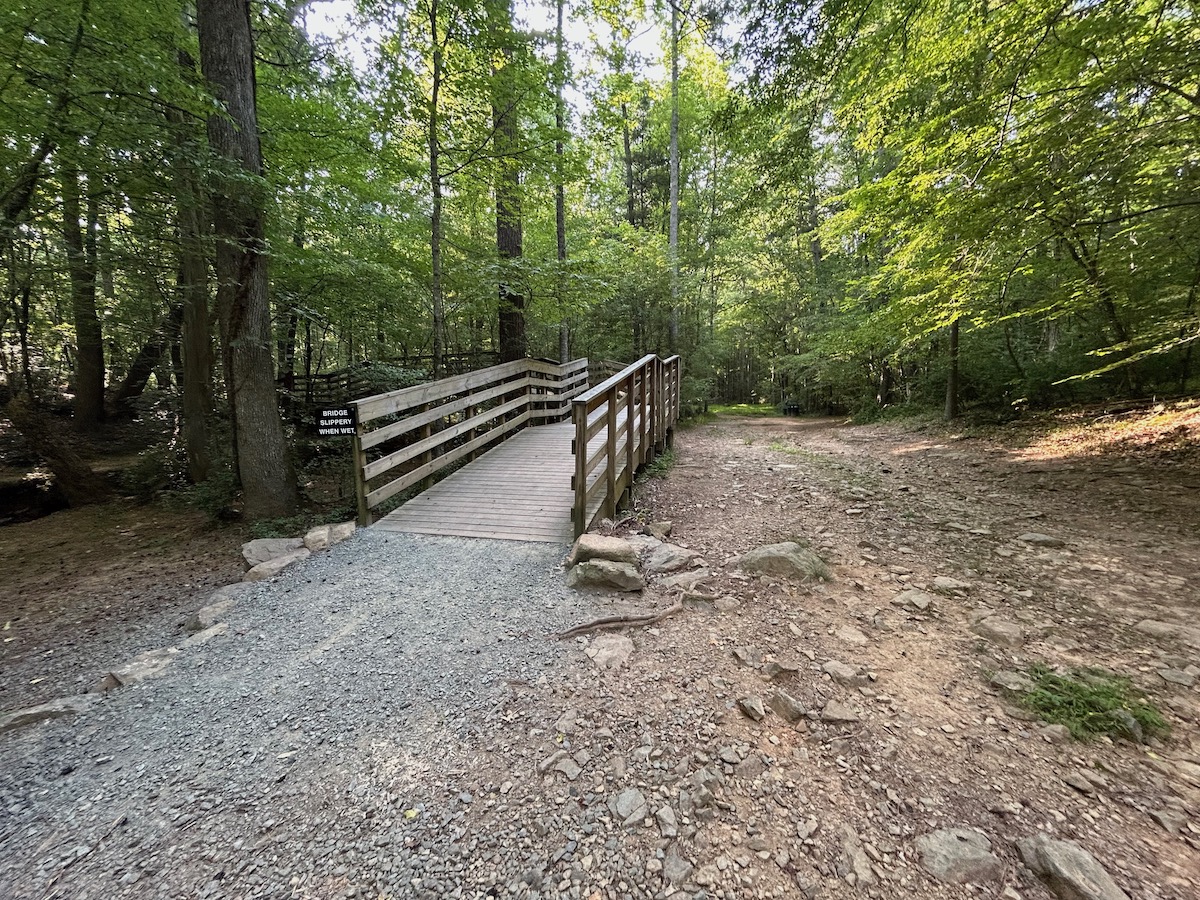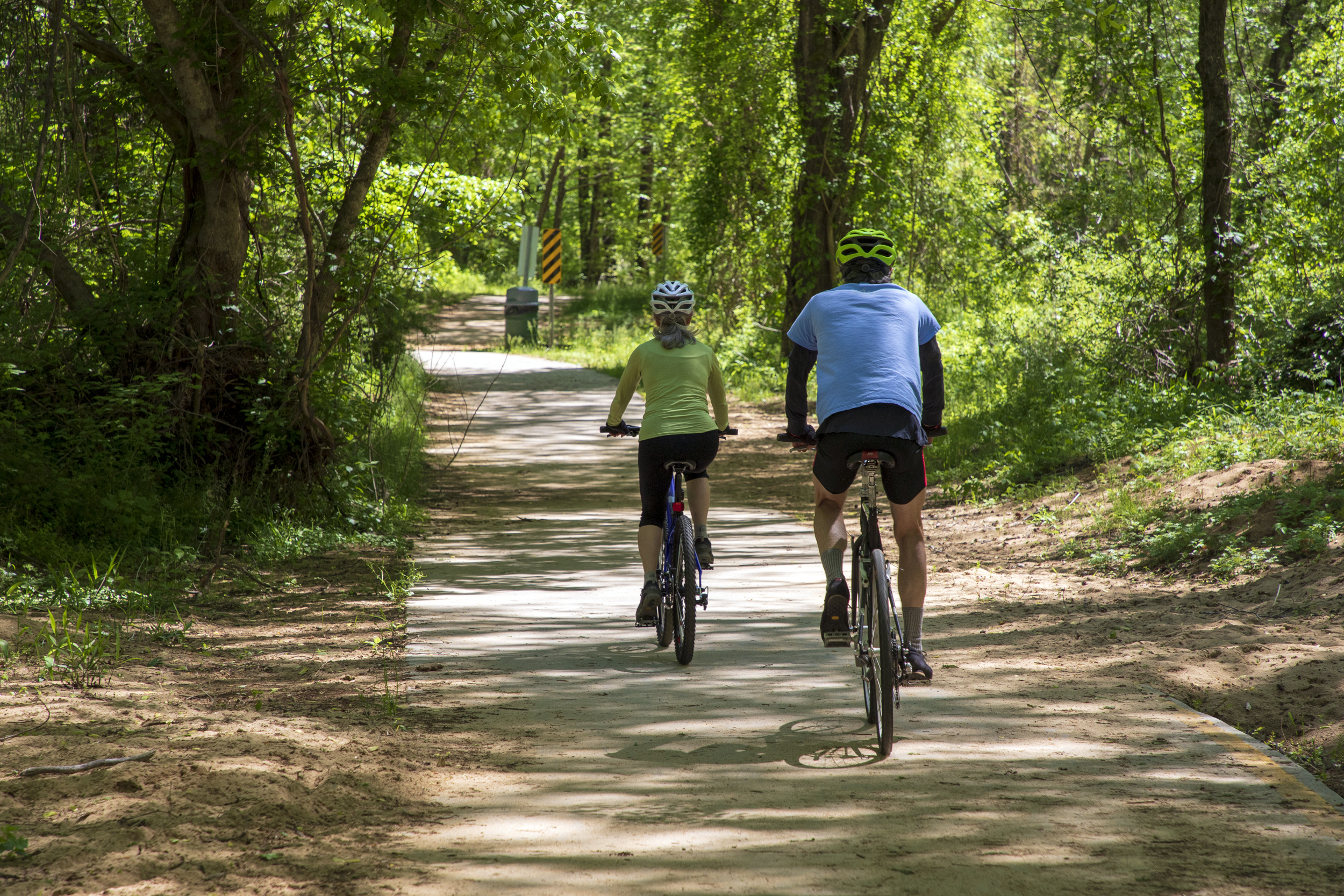
With Estes Drive’s bicycle and pedestrian improvements having been finished in 2024, the Town of Chapel Hill’s focus has shifted to adding similar infrastructure to Estes Drive Extension – which runs from Martin Luther King Jr. Boulevard to Carrboro’s town limits. While a design was approved last fall, changes were recently made after town staff received updates from the North Carolina Department of Transportation.
Last September, Chapel Hill staff used several months’ worth of public input to craft recommended design options for bicycle and multi-use paths along Estes Drive Extension. Those included a two-way buffered bike lane running alongside the multi-use path from the Carrboro town limits to Seawell School Road before transitioning to the bicycle lanes being on either side of Estes Drive Extension until its intersection with Martin Luther King Jr. Boulevard.
But a memo from Town Manager Ted Voorhees on Feb. 5 said NCDOT has since notified Chapel Hill that the federal funding it will allocate to the project will be less than half the initial estimates amid funding challenges. While staff believe more money can be locally matched through the Triangle West Transportation Planning Organization, the project’s total cost has to be lowered.
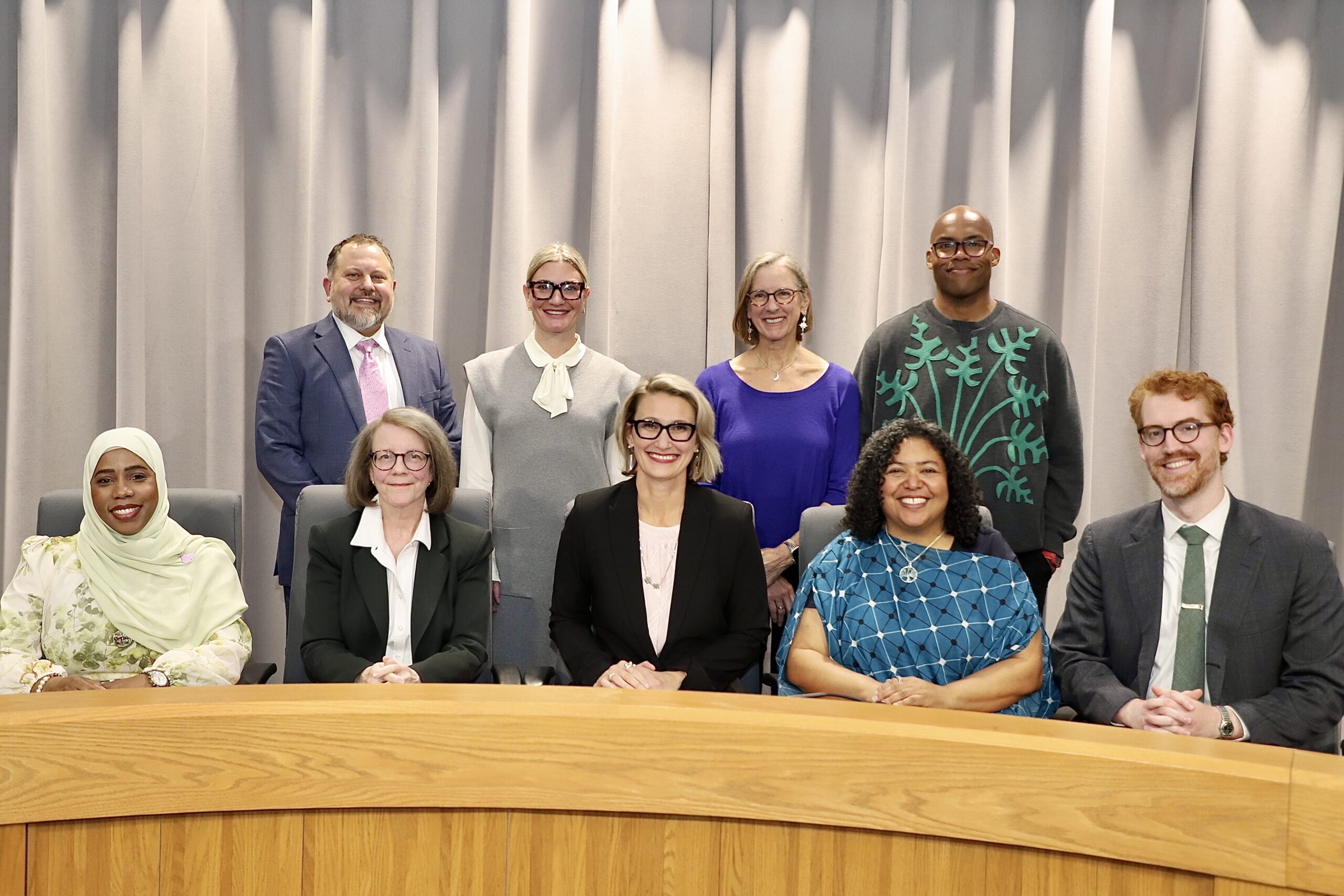
“In response to NCDOT input, there are changes being made on the Estes Drive extension project,” Chapel Hill Mayor Jess Anderson told 97.9 The Hill. “The project will still include a two-way cycle track, plus sidewalks plus bike lanes. But some of the changes actually are going to allow the project cost to go down while maintaining safety and accessibility.”
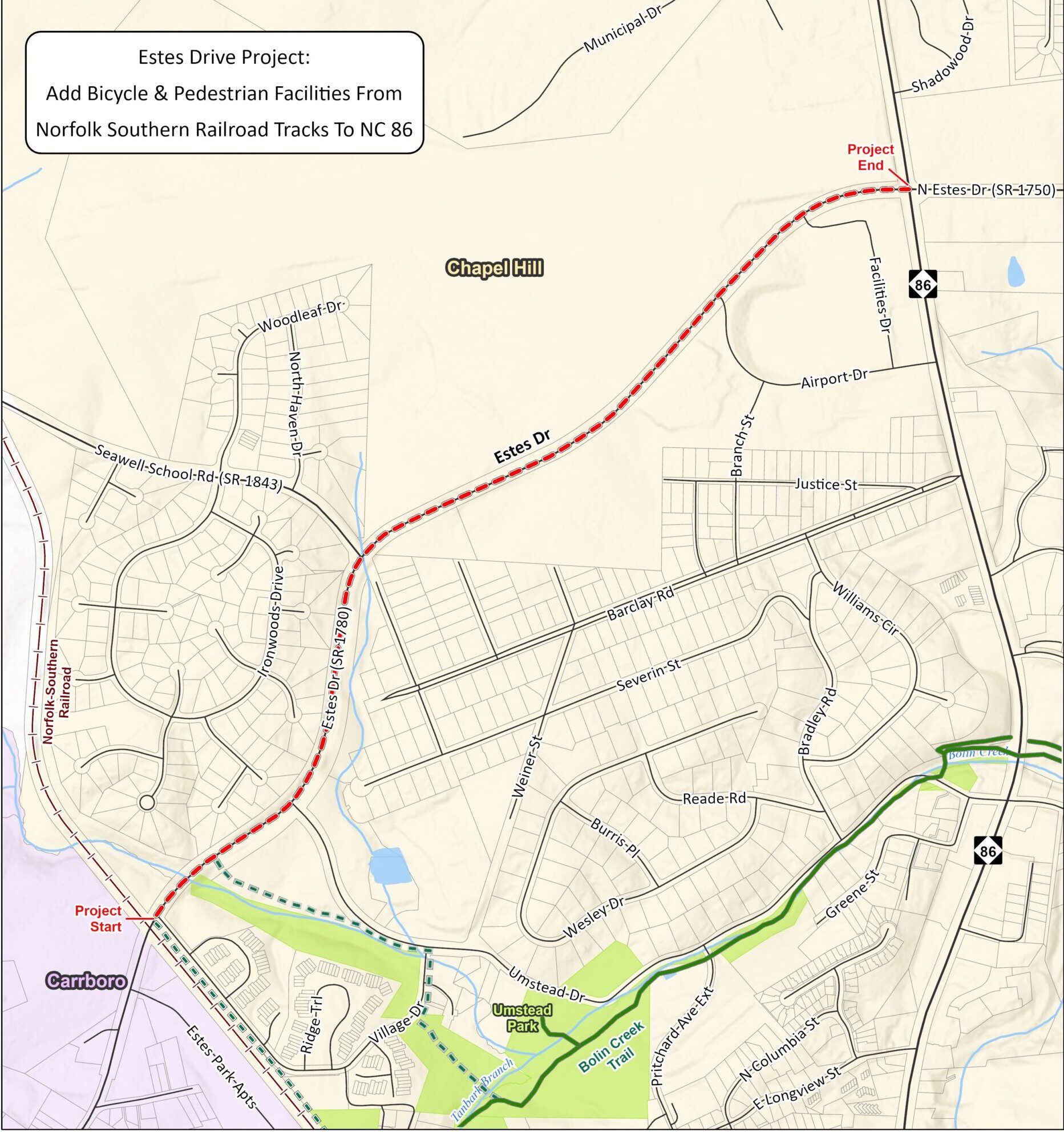
A map of the Estes Drive Extension Connectivity Project, with the red dotted line showing where new bicycle and pedestrian infrastructure will be built. (Image via the Town of Chapel Hill.)
The biggest update is the Carrboro side of the project will no longer feature dedicated bicycle lanes, with the designs sporting a combined 16-foot multi-use path for both bike and pedestrian traffic. The sidewalk will still be separated from the road with a curb and grass strip, as will the bicycle lanes on the Chapel Hill side – but those will have a 2-foot concrete median compared the initial 4-foot median design. The east-bound sidewalk of Estes Drive Extension between Seawell School Road and MLK Boulevard will also be smaller, going from 10 feet wide to 6 feet.
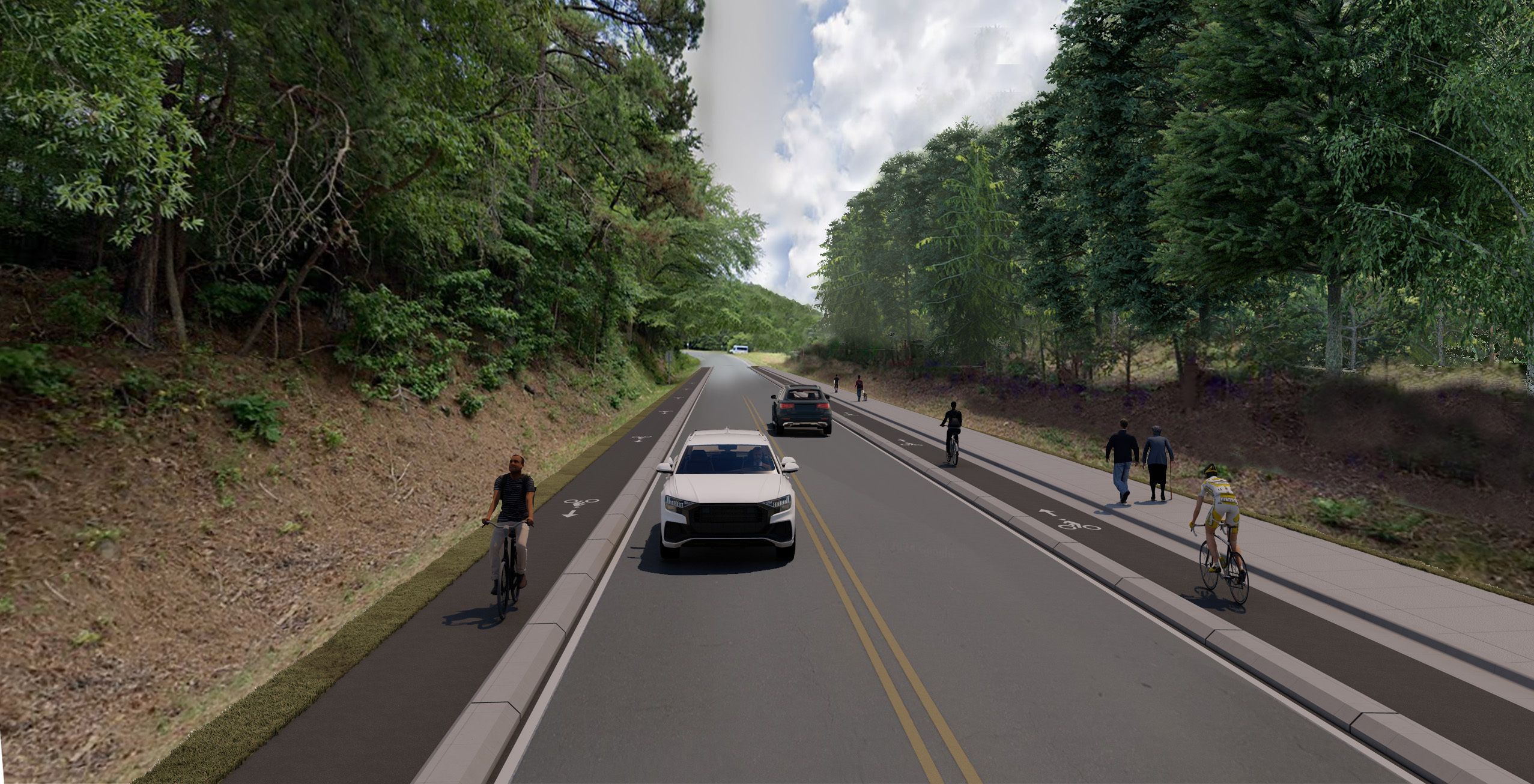
A rendering of the updated Estes Drive Extension design for the stretch from Seawell School Road to Martin Luther King Jr. Boulevard. The design features separate bicycle lanes from the multi-use path on the south side of the road. (Image via the Town of Chapel Hill.)
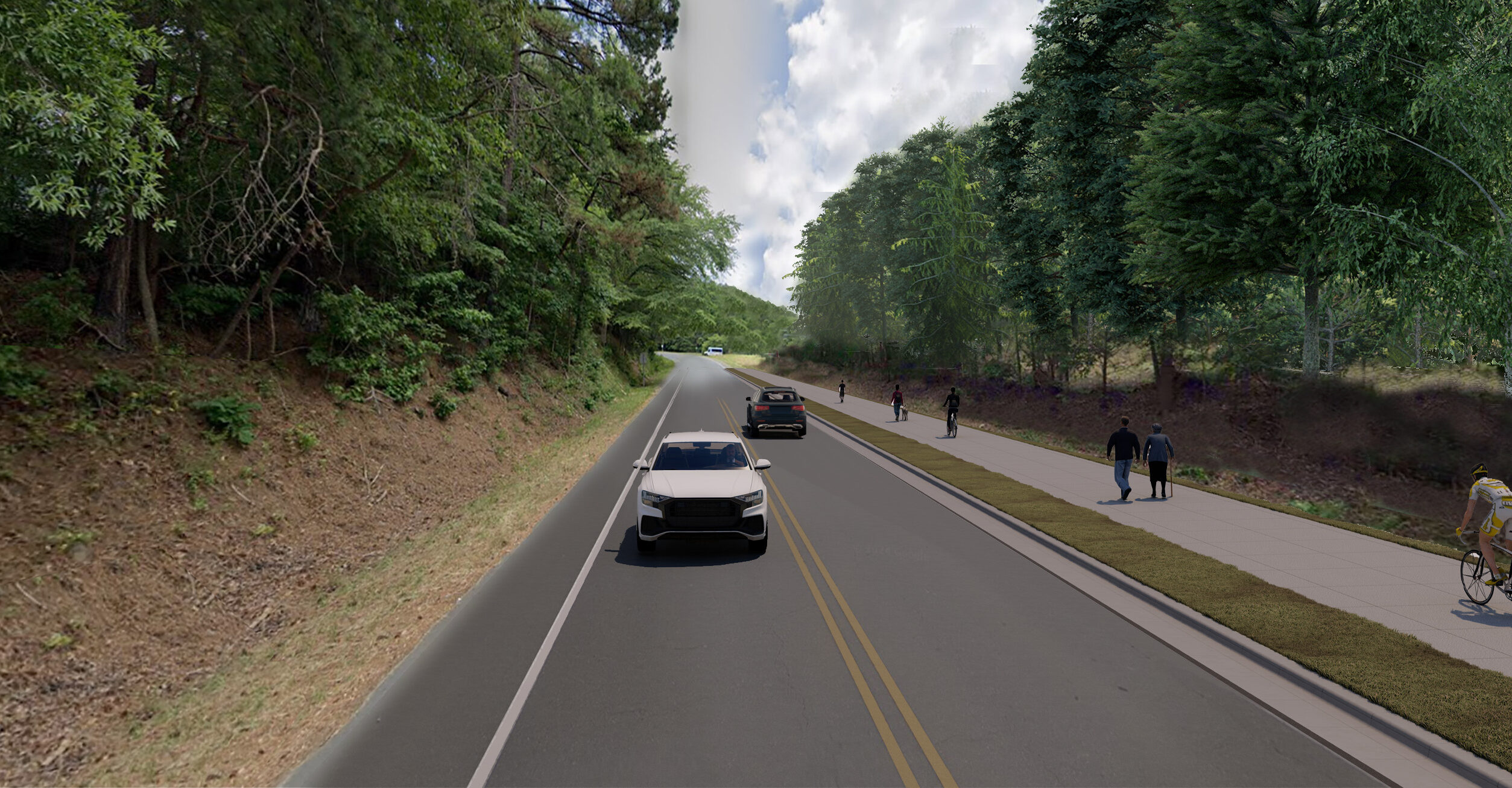
A rendering of the updated Estes Drive Extension design for the stretch from Seawell School Road to the Carrboro town limits at Village Drive. The updated design features a wider multi-use path for both bicycle and pedestrian traffic on the south side of the road. (Image via the Town of Chapel Hill.)
The funding changes at the state level means the construction – which must be coordinated with NCDOT – has been delayed to 2031 instead of 2026. Voorhees’ memo to the town council said staff will advocate for it to be prioritized and moved up. But until then, the staff and consultant designer NV5 will work with NCDOT to begin the next phase of design and environmental studies.
NV5 is working with Chapel Hill to design another ongoing multi-modal infrastructure project: the Bolin Creek Greenway extension, which aims to take the greenway north from Umstead Park and eventually connect to the future multi-use path on Estes Drive Extension. The project just finished a brief public comment period before starting the final planning phases and construction. Both efforts are examples, Anderson said, of Chapel Hill’s work to improve connectivity of the community through methods other than vehicle traffic.
“There are places that already kind of do that really well,” said the mayor. “There are places we know what needs to happen, but we’re waiting for something to redevelop, or we’re waiting for funding to come through, or we’re waiting to find out the funding for those things. But it is slowly, over time, turning into this everywhere-to-everywhere greenway network that was part of our vision.
“It changes your perspective,” Anderson added of using the greenways, “and what seems kind of daunting becomes more do-able, and then you’re like, ‘Oh yeah, I can get there from here!’ We’re hoping more and more folks realize that and continue to give us feedback on places they’d like to see more connectivity.”
Photo via the Town of Chapel Hill.
Chapelboro.com does not charge subscription fees, and you can directly support our efforts in local journalism here. Want more of what you see on Chapelboro? Let us bring free local news and community information to you by signing up for our newsletter.