The Southern Association of Colleges and Schools is the organization that accredits institutions of higher learning in our region. The accreditation manual is full of standards on governance, finance, libraries, undergraduate, graduate and professional programs, and on and on. Sadly, UNC has recently been admonished by the Association for allowing students to receive academic credit for fraudulent courses, the most recent incident in the ongoing scandal involving how UNC handles the education of athletes. How does a university verify that courses are meeting according to official schedules for the number of credit hours that are assigned? Just this week many academic departments at UNC received notice that they must provide “physical evidence” that courses are meeting, so some units are considering the use of a photographer to visit random classes to record that a teacher and students are present.
It seems to me that no system, short of George Orwell’s Big Brother screens in each classroom, can hope to document time in the classroom, even if we were to accept the hypothesis that time spent sitting in a room is a valid measure of the educational process. Why just the classroom? Shouldn’t we then be “recording” the countless hours we spend speaking with students before a class starts or after it ends or in the individual meetings where passionate and intellectually curious students explore further the subjects of our classes? Time spent in class provides only a fraction of the education that our students deserve and that we as committed faculty want to make available. As scholars, methods are important to us, so to comply with a method such as the one proposed, a method that hardly seems valid, seems to ask us to violate our basic principles as teachers and our integrity as scholars.
Further, I do not believe that any of these credit hour monitoring proposals would have seen the light of day had there not been exasperation about the disconnect between big time college sports and the mission of universities. There may be more than one reason to create a fake class, but at the very top of the list, with a large gap between number one and number two, is the need to keep revenue generating athletes, eligible. I don’t think that we fake classes in musicology or modern European history or molecular chemistry, because faculty across the galaxy of universities hold one another accountable. The education of our students has built in accountability. The “education” of keeping athletes eligible does not have such accountability, so we devise questionable strategies such as photographing classrooms, a reaction to the degradation of high standards that the athletic scandal has so sadly visited on our fine university.
Related Stories
‹

In Chapel Hill, NC School Superintendent Mo Green Offers a Plan for 'Achieving Educational Excellence'Mo Green's "Achieving Educational Excellence" plan seeks to make North Carolina schools the best in the nation by 2030.

On the Porch: Sen. Natalie Murdock - Good Work for NC District 20This Week:
NC Sen. Natalie Murdock is a native North Carolinian, UNC alum, and senate representative for District 20, which encompasses Durham and Chatham County. She served as Deputy Communications Director for NC Attorney General Josh Stein. She is the first woman of color under 40 to be elected to the NCGA and was elected in 2020 with over 100,000 votes. As a freshman senator she immediately filed over 100 bills that range from supporting black maternal health, expanding healthcare access for ALL to providing greater access to the ballot.
'Everything We Do Has Meaning': Lloyd Kramer Reflects on a Career in the HumanitiesOutgoing Carolina Public Humanities director Lloyd Kramer reflects on his career, and the social importance of history and the humanities.
'We Are 49th Out Of 50': Public School Forum of NCWith education at the center of state budget talks, the Public School Forum of NC releases a report on the state of North Carolina's schools.
![]()
What to Expect (and Not Expect) in the General Assembly Short SessionImmigration, education, marijuana, childcare, open records: which bills will pass the General Assembly this year? Sen. Graig Meyer weighs in.
DeSantis Is Defending New Slavery Teachings. Civil Rights Leaders See a Pattern of ‘Policy Violence’Written by STEVE PEOPLES, BRENDAN FARRINGTON AND KAT STAFFORD Civil rights activists cheered when Ron DeSantis pardoned four Black men wrongfully convicted of rape as one of his first actions as Florida’s governor. But four years later, as DeSantis eyes the presidency, their hope that the Republican would be an ally on racial justice has long faded. Instead, […]
North Carolina House Unlikely To Proceed With Education Overhaul, Speaker SaysWritten by HANNAH SCHOENBAUM A sweeping education proposal that would take away power from North Carolina superintendents and the State Board of Education, placing it in the hands of public school parents, is unlikely to advance this session, the House speaker said Thursday. The 26-page bill, introduced last week but pulled from a committee agenda, would […]
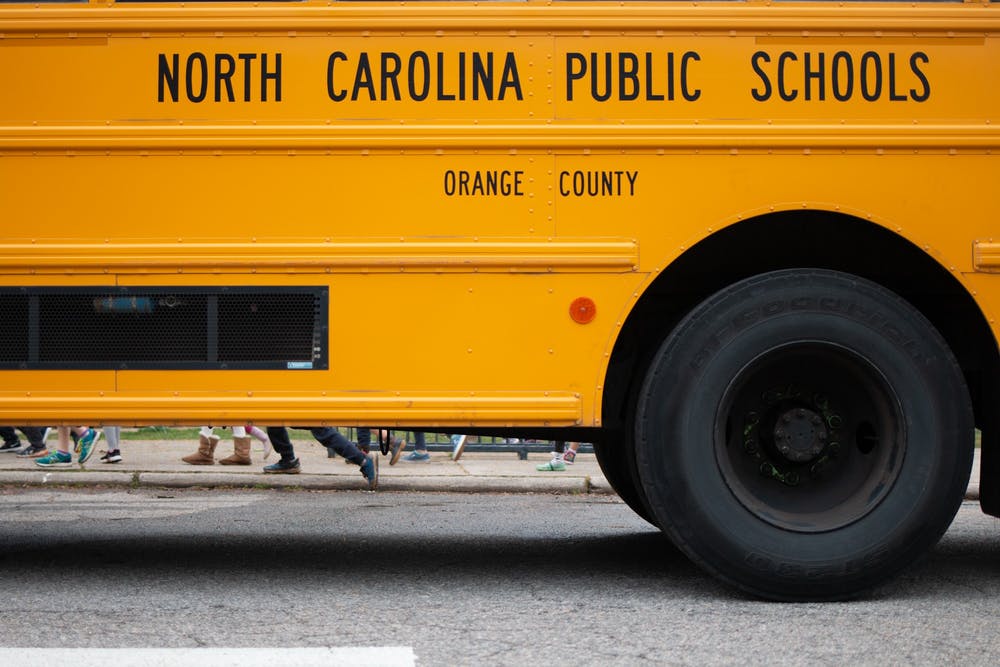
CHCCS Elementary Schools' Early Start Time Will Not Move ForwardFacing a bus driver shortage, the Chapel Hill-Carrboro City Schools Board of Education recently brainstormed solutions to get students to school on time. One possibility was moving elementary school start times forward. But some parents were opposed to this change, and the school board decided against it.
'How Are We Engaging in Schools?' Orange County Shares Survey ResultsIn its first meeting of the year, the Orange County Schools Board of Education discussed results from a survey that aimed to better understand issues facing parents and students.
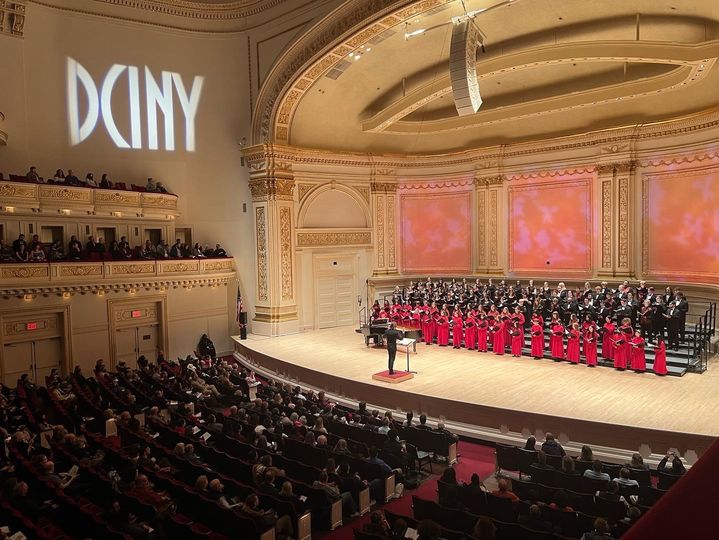
Chapel Hill High School Choir Performs at Radio City, Carnegie HallLast month, choir students at Chapel Hill High School made a trip to New York to perform at Radio City Music Hall and Carnegie Hall — along with the Rockettes and Eric Whitacre.
›