Summer is ending, which –for those of us in education– means that phone calls and emails start rolling in from parents concerned about their children’s teachers.
“Is it a good match?”
“Will my child thrive?”
Though I am a fully grown woman with limited mental capacity for recalling why I opened the refrigerator, I still vividly remember when I learned I had Mrs. Vagena for my third grade teacher. (Yes, that really was her name). I wanted out of her class in the worst possible way.
Standing a mere 5’0” tall and weighing in at a cool 90 pounds, Mrs. Vagena could hurl a desk across the room at neck-breaking speed. God so help the kid who randomly stuffed his papers in the desk rather than putting them neatly in the folder because his life took a turn for the worse once his nasty habit was discovered. First she would start yelling about what a pigsty the desk was, and then she would ceremoniously lift the back legs of the desk, dump out its contents, and hurl the desk to the ground leaving the red-faced humiliated 8-year-old to pick up the mess. With her as the teacher, even the most “organizationally challenged” kids discovered coping strategies that resulted in a ‘neat desk.’
Mrs. Vagena was also strict. She was Catholic and came very close to becoming a nun before she ran into a wannabe priest and they made googly eyes at each other. While getting married certainly ended her dreams of nun-hood, it did not diminish her drive for eradicating imperfection from the world. She graded our assignments in red ink, and there was no such thing as partial credit. Answers were either right or wrong because you either did it right or you didn’t. (In fairness to her, she held herself to the same high bar. She worked hard, prepared thorough lessons, and gave 110% every day.)
Mrs. Vagena’s reputation amongst 3rd-graders was that of a tyrant. I cried for a week when I saw my name on her roster posted outside the school building. Back then, in the stone ages of education, parents didn’t call, they didn’t email, and they didn’t raise a fuss if their youngster didn’t like their teacher. Instead they let us suffer through the year.
According to my standardized test scores, I learned many things from Mrs. Vagena. However, here is the lesson that paid off the most: Mrs. Vagena taught me how to deal with difficult people who were in charge of my fate. In fact, every student in that room had to learn to deal with her. Whether we liked it or not, she was the teacher, the boss, the scary tyrant, and the one who determined our whether or not we would be promoted to 4th grade, a.k.a. Mecca. Mrs. Vagena was our world.
Since the 1970s, education has come a long way. Public school teachers are no longer able to throw desks, and principals aren’t allowed to publicly paddle students. Fear and intimidation are losing their places as “educational motivators,” and, personally, I think that is a good thing. Love for something, not fear of it, should be the primary motivator for everything we do in life.
The one area where I think we have room to grow is teaching kids how to adapt to the world. Education, the training ground for life, has become very pupil-centered. Every teacher is taught to meet kids at their individual level and modify instruction as needed. The good part about this approach is that many kids are graduating from high school because there are lots of supports to keep them afloat. I’ve personally blown up dozens of life preservers because I believe in the value of education.
However, the problem with our current system is that we are not training students for life.
Life is not pupil-centered. In fact, it is the opposite. Like the organizationally challenged student who worked extra hard to make their desk neat, we all have to learn to adapt to the world. Sometimes the world is like the nice, warm teacher that makes us feel like we can fly to the moon, and sometimes the world is a lonely place and makes us feel like we can’t do anything right. As long as we have developed the inner resources to adapt to whatever it throws our way, we will make it.
That is what a real education is about.
Related Stories
‹
![]()
Tell Me Something: The Importance of Faculty Diversity, with UNC's Constance LindsayAaron welcomes UNC education professor Constance Lindsay to discuss the importance of faculty diversity on K-12 student success.

On the Porch: Carlos Lima and Daisy Butzer - United Way for a Better ChathamThis Week:
Carlos Lima is a native of Caracas, Venezuela. He moved to North Carolina with his family in 2001. Before coming to United Way, Carlos was Director of Operations and Finance at St. Thomas More Catholic Church in Chapel Hill for 20 years. Carlos has been the Executive Director of United Way of Chatham County for the past year, and he has learned firsthand the value of service to the community and the benefits of collective impact in addressing the most critical needs of the residents in our county. Carlos and his wife and four grown children have called this area home for over two decades. When he’s not working, he enjoys spending time with his family, cooking, reading, and playing board games.
Daisy Butzer is the Impact Manager at United Way of Chatham County, where she leads the Chatham Housing Collective and the Chatham Success Network. Through both collaboratives, Daisy works closely with community partners to coordinate services and use data to better support individuals and families. She draws from her professional experience supporting various public health programs, research studies, and philanthropic initiatives. Originally from Oklahoma, Daisy and her husband moved to North Carolina in 2022 to attend graduate school at UNC.

In Chapel Hill, NC School Superintendent Mo Green Offers a Plan for 'Achieving Educational Excellence'Mo Green's "Achieving Educational Excellence" plan seeks to make North Carolina schools the best in the nation by 2030.
On the Porch: Sen. Natalie Murdock - Good Work for NC District 20This Week:
NC Sen. Natalie Murdock is a native North Carolinian, UNC alum, and senate representative for District 20, which encompasses Durham and Chatham County. She served as Deputy Communications Director for NC Attorney General Josh Stein. She is the first woman of color under 40 to be elected to the NCGA and was elected in 2020 with over 100,000 votes. As a freshman senator she immediately filed over 100 bills that range from supporting black maternal health, expanding healthcare access for ALL to providing greater access to the ballot.
'Everything We Do Has Meaning': Lloyd Kramer Reflects on a Career in the HumanitiesOutgoing Carolina Public Humanities director Lloyd Kramer reflects on his career, and the social importance of history and the humanities.
'We Are 49th Out Of 50': Public School Forum of NCWith education at the center of state budget talks, the Public School Forum of NC releases a report on the state of North Carolina's schools.
![]()
What to Expect (and Not Expect) in the General Assembly Short SessionImmigration, education, marijuana, childcare, open records: which bills will pass the General Assembly this year? Sen. Graig Meyer weighs in.
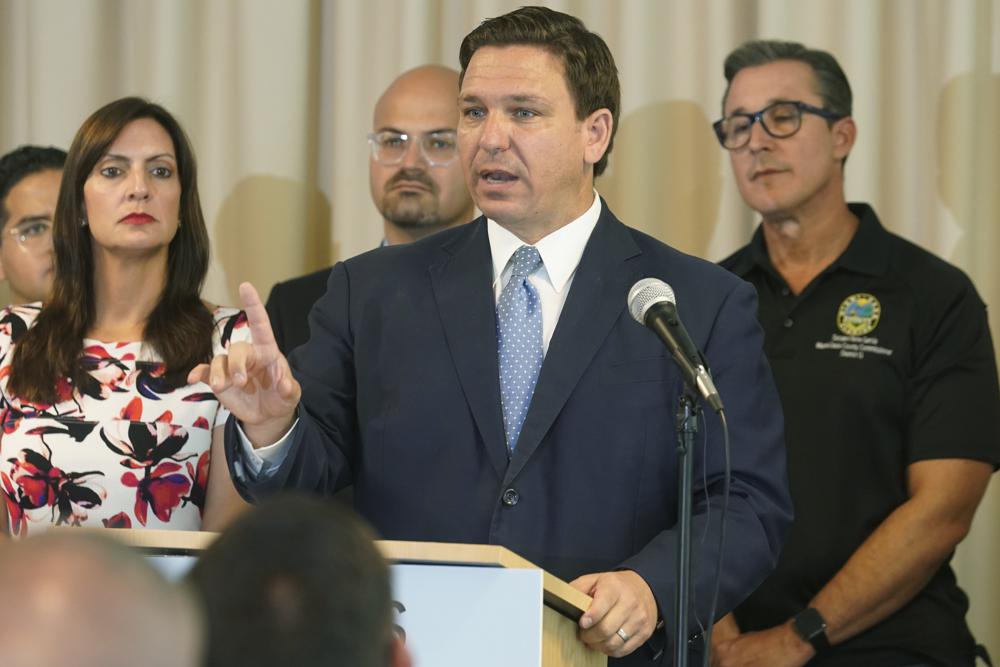
DeSantis Is Defending New Slavery Teachings. Civil Rights Leaders See a Pattern of ‘Policy Violence’Written by STEVE PEOPLES, BRENDAN FARRINGTON AND KAT STAFFORD Civil rights activists cheered when Ron DeSantis pardoned four Black men wrongfully convicted of rape as one of his first actions as Florida’s governor. But four years later, as DeSantis eyes the presidency, their hope that the Republican would be an ally on racial justice has long faded. Instead, […]
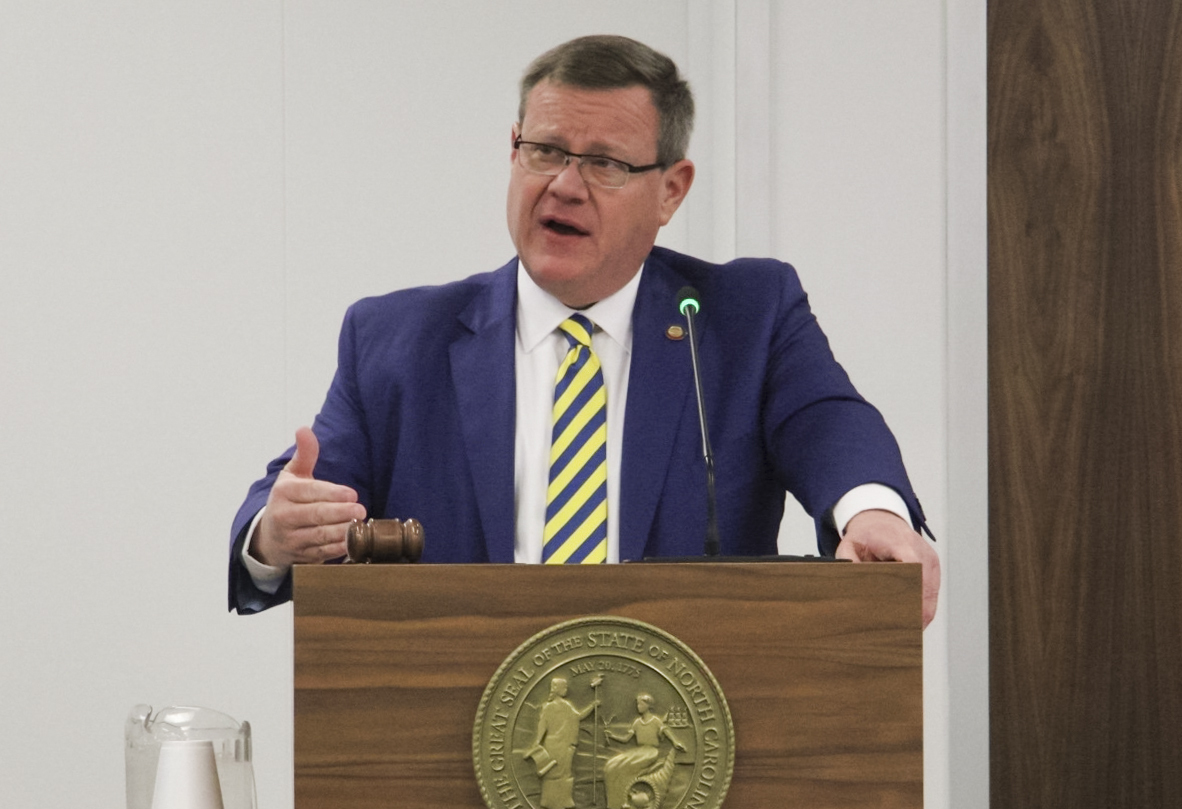
North Carolina House Unlikely To Proceed With Education Overhaul, Speaker SaysWritten by HANNAH SCHOENBAUM A sweeping education proposal that would take away power from North Carolina superintendents and the State Board of Education, placing it in the hands of public school parents, is unlikely to advance this session, the House speaker said Thursday. The 26-page bill, introduced last week but pulled from a committee agenda, would […]
CHCCS Elementary Schools' Early Start Time Will Not Move ForwardFacing a bus driver shortage, the Chapel Hill-Carrboro City Schools Board of Education recently brainstormed solutions to get students to school on time. One possibility was moving elementary school start times forward. But some parents were opposed to this change, and the school board decided against it.
›