Wouldn’t it be great if Carolina had a professor of African American history who actually lived through the Civil Rights struggles and the desegregation of the public schools? Wouldn’t it be even better if that professor had grown up in the town where the university is located and experienced the tough adjustments that came with her move from an all-black school to an almost all-white school?
All those wishes came true recently when Charlene Regester visited North Carolina Bookwatch to talk about her book, “African American Actresses: The Struggle for Visibility, 1900–1960.”
From “Birth of a Nation” in 1915 to Hattie McDaniel in “Gone with the Wind,” to Ethel Waters in “Member of the Wedding” in 1952, African-American actresses made their way into American movies in the first half of the last century. Regester’s book tells the real stories of these women who became stars in a time of segregation and oppression.
Indiana University Professor Audrey McCluskey writes about the book, “In this important work, Charlene Regester brings into focus the lives and careers of representative black women actresses in Hollywood across generational divides in order to reposition them beyond the confining shadow of otherness and marginality. The sum result is a re-telling and correction of history.”
The book’s chapters titles are a list of the actresses Regester covers and hints of their stories: Madame Sul-Te-Wan: The Struggle for Visibility, Nina Mae McKinney: Early Success and Tumultuous Career, Louise Beavers: Negotiating Racial Difference, Fredi Washington: The Masquerades and the Masks, Hattie McDaniel: Centering the Margin, Lena Horne: Actress and Activist, Hazel Scott: Resistance to Othering, Ethel Waters: Personification of Otherness, and Dorothy Dandridge: Intertwining the Reel and the Real.
Regester explains how each actress had to compromise and accommodate to the racial restrictions of the times. Their successes brought them out of the ghetto but not into the living rooms of their white promoters and fans.
Regester’s own story, though underappreciated today, is an important part of North Carolina history. Thankfully, her story has been preserved by an oral history interview conducted by Susan Upton in 2001 and on file in the Southern Historical Collection.
Here is the public abstract of that interview:
“Charlene Regester recounts her educational experience in Chapel Hill public schools during the early integration efforts. Her parents ardently advocated for integrated schools as a means to improve blacks’ access to resources. They petitioned to transfer Regester into all-white Estes Hills Elementary School; she remained in integrated schools throughout her secondary school career. Though they did endorse school integration, Regester’s parents still attempted to protect her from the dangers of white racism by encouraging her not to patronize racist white businesses. Regester continued to heed their warnings even after the demise of Jim Crow facilities. Regester contends that integration cost blacks their identities and burdened them with a sense of inferiority. Her frustration with integration at her school led her to take part in the black student movement. She argues that most white students and teachers ostracized black students solely because of race, and she blames white teachers for establishing low standards for black students, which she says they then internalized. Regester also points to a racial and class divide within the Chapel Hill community: while the children of University of North Carolina professors had vast resources, poor whites and blacks had to compensate for their limited resources in other ways. Regester ends the interview with an evaluation of school integration. She contends that because of the psychological toll on blacks and the loss of black cultural institutions, integration did more harm than good.”
The abstract makes you want to hear the whole story, doesn’t it? Well, you do not have to wait to see and hear Professor Regester. You can watch her recent interview on North Carolina Bookwatch.
Related Stories
‹
![]()
Life is Not About Money, But About PeopleWhile I respect Dr. Thorp as Chancellor, I was very frustrated listening to his interview regarding the Northside community, a traditional African-American part of Chapel Hill. He seemed to be on the side of the African Americans whose have lived there for generations but made no effort to defend their right to stay there, whereas […]
![]()
Are We Being Bullied?I suspect that no matter your age, at some time in your life you felt bullied. Sure, most of us endured the schoolyard or school bus bully, the playground bully and even the neighborhood bully that hardly anyone was willing to stand up to even on a good day. As we move through life, we […]
On the Porch: Carlos Lima and Daisy Butzer - United Way for a Better ChathamThis Week:
Carlos Lima is a native of Caracas, Venezuela. He moved to North Carolina with his family in 2001. Before coming to United Way, Carlos was Director of Operations and Finance at St. Thomas More Catholic Church in Chapel Hill for 20 years. Carlos has been the Executive Director of United Way of Chatham County for the past year, and he has learned firsthand the value of service to the community and the benefits of collective impact in addressing the most critical needs of the residents in our county. Carlos and his wife and four grown children have called this area home for over two decades. When he’s not working, he enjoys spending time with his family, cooking, reading, and playing board games.
Daisy Butzer is the Impact Manager at United Way of Chatham County, where she leads the Chatham Housing Collective and the Chatham Success Network. Through both collaboratives, Daisy works closely with community partners to coordinate services and use data to better support individuals and families. She draws from her professional experience supporting various public health programs, research studies, and philanthropic initiatives. Originally from Oklahoma, Daisy and her husband moved to North Carolina in 2022 to attend graduate school at UNC.

In Chapel Hill, NC School Superintendent Mo Green Offers a Plan for 'Achieving Educational Excellence'Mo Green's "Achieving Educational Excellence" plan seeks to make North Carolina schools the best in the nation by 2030.
On the Porch: Sen. Natalie Murdock - Good Work for NC District 20This Week:
NC Sen. Natalie Murdock is a native North Carolinian, UNC alum, and senate representative for District 20, which encompasses Durham and Chatham County. She served as Deputy Communications Director for NC Attorney General Josh Stein. She is the first woman of color under 40 to be elected to the NCGA and was elected in 2020 with over 100,000 votes. As a freshman senator she immediately filed over 100 bills that range from supporting black maternal health, expanding healthcare access for ALL to providing greater access to the ballot.
'Everything We Do Has Meaning': Lloyd Kramer Reflects on a Career in the HumanitiesOutgoing Carolina Public Humanities director Lloyd Kramer reflects on his career, and the social importance of history and the humanities.
'We Are 49th Out Of 50': Public School Forum of NCWith education at the center of state budget talks, the Public School Forum of NC releases a report on the state of North Carolina's schools.
![]()
What to Expect (and Not Expect) in the General Assembly Short SessionImmigration, education, marijuana, childcare, open records: which bills will pass the General Assembly this year? Sen. Graig Meyer weighs in.
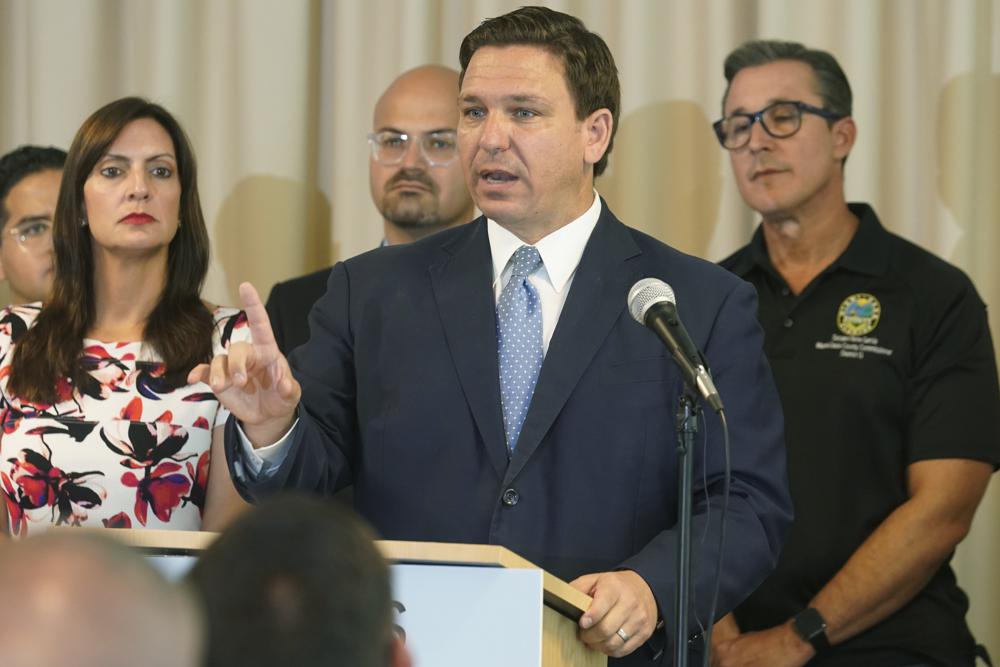
DeSantis Is Defending New Slavery Teachings. Civil Rights Leaders See a Pattern of ‘Policy Violence’Written by STEVE PEOPLES, BRENDAN FARRINGTON AND KAT STAFFORD Civil rights activists cheered when Ron DeSantis pardoned four Black men wrongfully convicted of rape as one of his first actions as Florida’s governor. But four years later, as DeSantis eyes the presidency, their hope that the Republican would be an ally on racial justice has long faded. Instead, […]
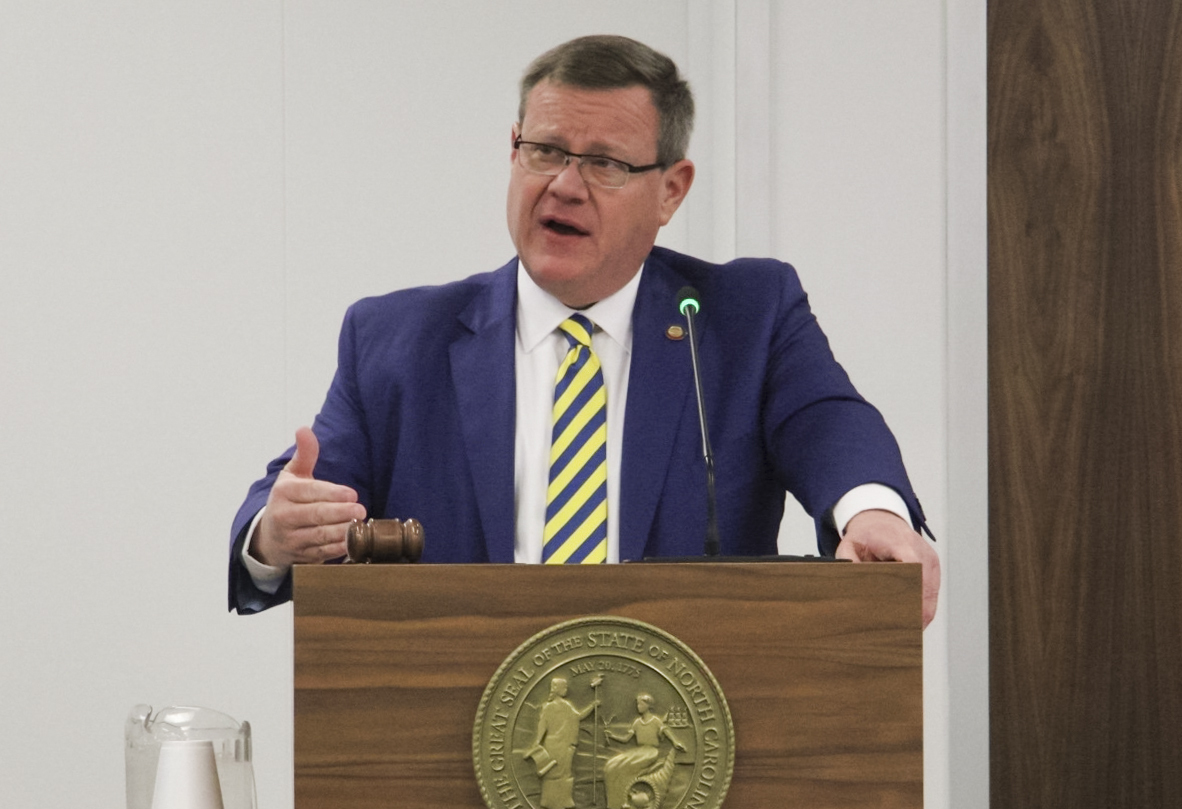
North Carolina House Unlikely To Proceed With Education Overhaul, Speaker SaysWritten by HANNAH SCHOENBAUM A sweeping education proposal that would take away power from North Carolina superintendents and the State Board of Education, placing it in the hands of public school parents, is unlikely to advance this session, the House speaker said Thursday. The 26-page bill, introduced last week but pulled from a committee agenda, would […]
›