First there was Daniel Boone.
Boone’s real exploits on America’s frontier made him a legend in a new country whose people were ever pushing westward, driving the boundaries of their nation to the Pacific and beyond.
The history of our country’s push westward has never been easy to write, wrapped up as it is with contradictory themes. The tenacious heroism of the settlers braving the long dangerous treks to new homes has to be matched up against the greed, deceit, and callousness that forced the original inhabitants off their lands.
While the expansion of democracy led to a land of freedom admired throughout the world, it was built in part on lands seized from a weak neighbor.
How can that story best be told?
North Carolina native poet, novelist, and teacher Robert Morgan showed us one way in his recent biography, “Boone.” Using his great storytelling skills, Morgan demythologized Boone, while, at the same time, showing him to be an extraordinary and fascinating person.
From his home base along the Yadkin River in North Carolina where he grew up, Boone explored Kentucky and then pulled his kinfolk, neighbors, and countless others across the mountains to his new home country. Later, many of them followed Boone further west to Missouri.
Other men, some of them with adventurous spirits similar to Boone’s, continued the push westward long after Boone left the scene. In his latest book, “Lions of the West: Heroes and Villains of the Westward Expansion,” Morgan continues the saga. Instead of focusing on just one man as he did with “Boone,” he uses short profiles of ten different men to develop a panoramic look at a historic era.
He picked a variety of subjects. Some, like David Crockett, Sam Houston, Kit Carson, and John “Johnny Appleseed” Chapman, are, like Boone, mythical figures, demigods in America’s national pantheon.
Others like Presidents Thomas Jefferson, Andrew Jackson, James K. Polk, and John Quincy Adams, though not as colorful, were even more important. They made controversial decisions that put the power of the nation behind their visions of an expanding country.
Most of us remember learning in high school history that the key event in opening the door to the expansion of the United States was Jefferson’s Louisiana Purchase in 1803. Morgan’s portrait of Jefferson shows how his strong and continuing interest in the western part of North America arose long before 1803.
The largest acquisition of territory, other than the Louisiana Purchase, had a North Carolina connection. As president, North Carolina native and UNC graduate James K. Polk led the country into the war with Mexico and the acquisition of the Southwest and California. Even while pointing out Polk’s numerous flaws, Morgan praises him as one of the country’s most effective presidents.
Morgan includes another North Carolina-connected president, Andrew Jackson, for his role in opening the west. Today, historians criticize Jackson for his part in the forcible removal of the eastern tribes of Native Americans. But Morgan’s sympathetic portrait of Jackson’s bravery, tenacity, and open democracy, shows the reader why many historians admire him.
The tales of heroic fighters like Sam Houston, David Crockett, and Kit Carson make them obvious choices for “Lions of the West.” But why did Morgan include “Johnny Appleseed” Chapman? Although apples and trees were important on the frontier, I think Morgan used him to show that the settlement of the West resulted more from the determination of ambitious ordinary people than from government direction.
“Lions of the West” is full of many more good stories, all told by a talented author, whose histories and biographies read like his much-admired fiction.
Related Stories
‹
![]()
2 Years After Hurricane Helene, Where Does Relief Fall Short in North Carolina? – On Air Today (September 29, 2026)Public Policy Analyst Alex Campbell joins 97.9 The Hill's Brighton McConnell on Tuesday, September 29 shortly after the two-year mark of Hurricane Helene.
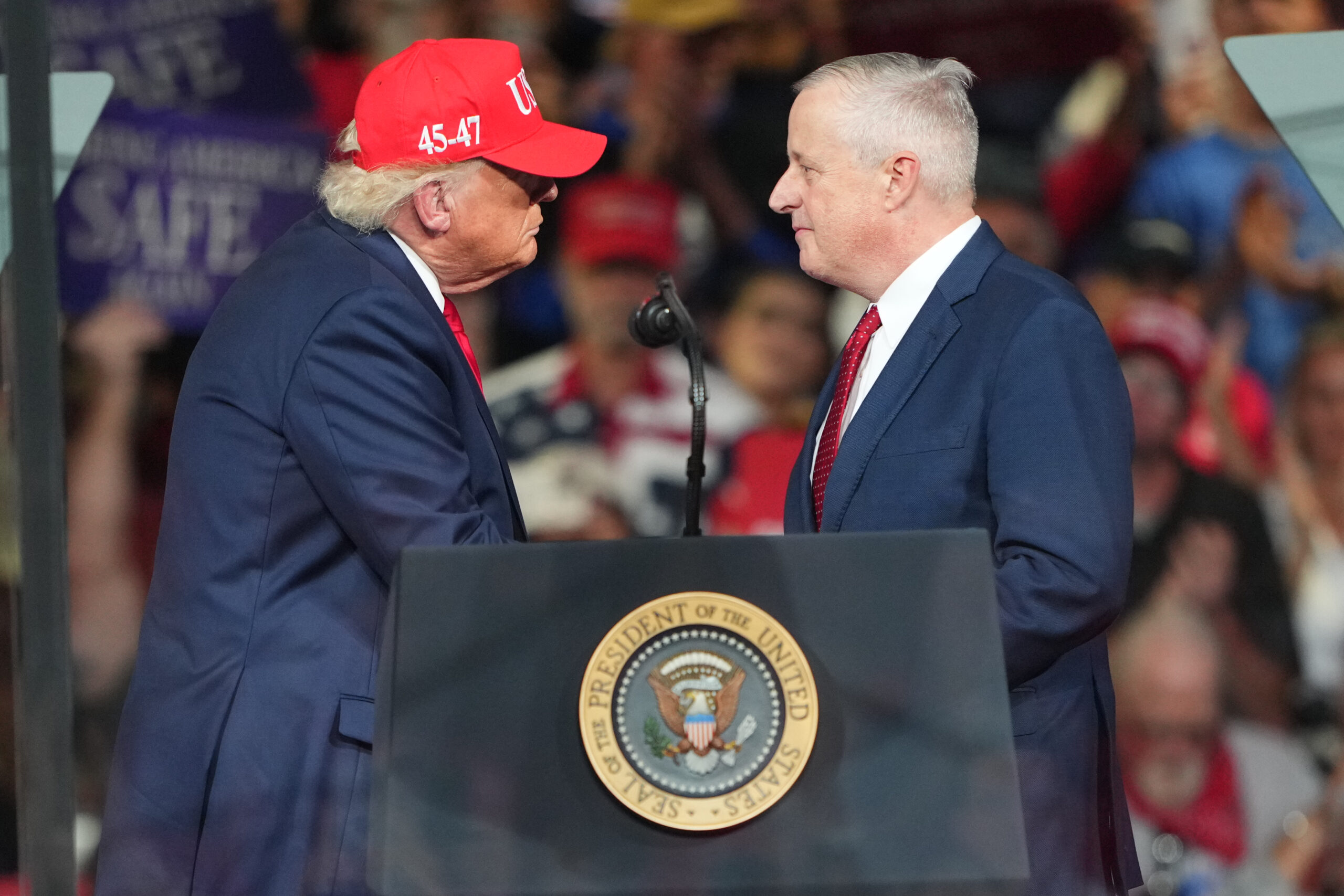
Trump Refers to Black Man From Racially Offensive 1988 Campaign Ad While Stumping in North CarolinaDuring a stop in North Carolina, Trump referenced one of the most controversial campaign advertisements that relied on racist tropes.

Postal Service Work To Comply With Trump’s Executive Order Is Rushed and Sloppy, a Whistleblower ContendsThe U.S. Postal Service is poised to launch a hastily built, error-riddled computer system that could jeopardize the process of mail voting.

Longtime Chatham County Educator Wins $10 Million Lottery PrizeThe North Carolina Education Lottery office revealed that Jean Johnson, who teaches in Chatham County, is the winner of a $10 million prize.
![]()
Theodore Nollert on North Carolina's Budget Corrections Bill and Its Process – On Air Today (August 26, 2026)Theodore Nollert — the directory of policy for Carolina Forward and a Chapel Hill Town Council member — joins 97.9 The Hill's Brighton McConnell on Wednesday, August 26.

UNC Health Expands, Rebrands Venture Capital Efforts of Emerging TechThe statewide healthcare system announced Rex Health Ventures platform is now UNC Health Ventures and will use $125 million to invest in emerging health tech companies.
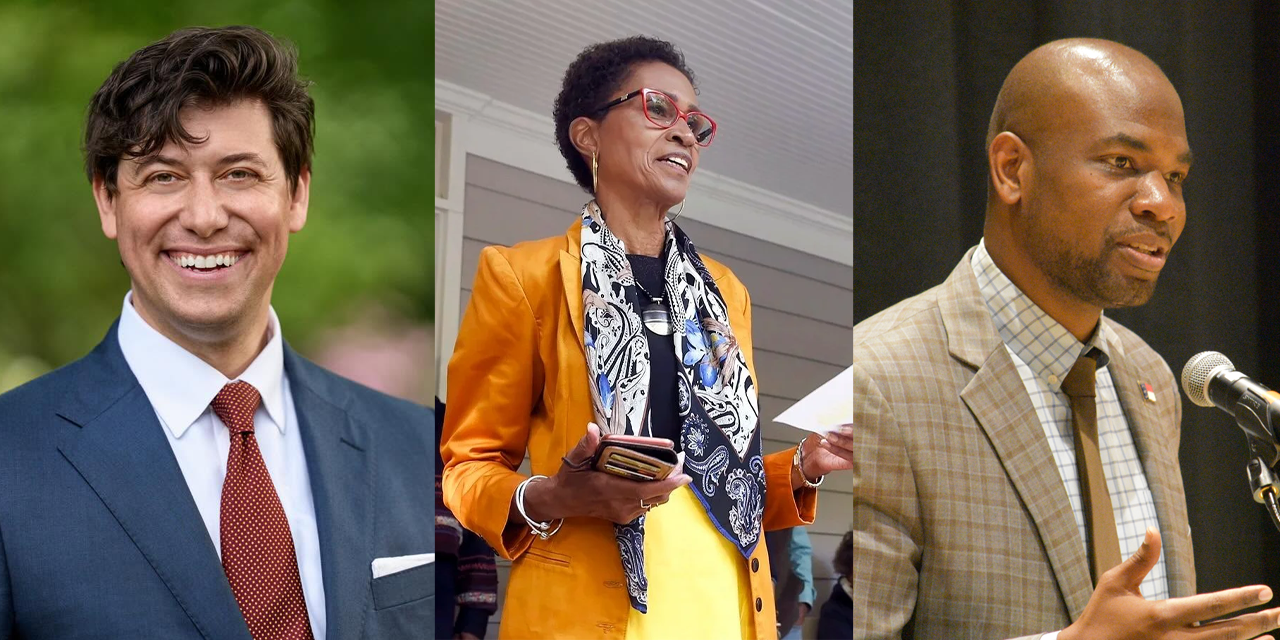
Corporate Tax Cuts, Prediction Market Leeway, and Underfunding Education: Why Orange County's Legislators Voted Against NC's BudgetAll three of Orange County’s state representatives voted against North Carolina's updated budget, citing issues with its contents and construction.
On the Porch: Dr. James Wood - Sports Around the WorldThis Week:
James Wood is currently Professor of Latin American and modern world history at North Carolina A&T State University. He is the author of The Society of Equality: Popular Republicanism and Democracy in Santiago de Chile, 1818-1851 and the co-editor of "Problems in Modern Latin American History: Sources and Interpretations", now in its fifth edition with Rowman and Littlefield. As a Fulbright scholar for Chile in 2016 he was a visiting professor at the Universidad Diego Portales in Santiago (where he observed Chilean student activism up close).
On the Porch: Bill Brown - Art and Science Merge at NCMAThis Week:
Bill Brown joined the North Carolina Museum of Art as a Conservation Intern in 1988. Thirty-two years later he retired from the Art Museum as Chief Conservator. He received his M.A. and Certificate of Advanced Studies in Conservation from State University College at Buffalo, NY in 1989. At the Museum, he established the Art + Science Initiative, a collaborative program with Duke University math and science departments. Bill has a passion for Italian Old Master Paintings of the 14th to 18th century. He works part-time as a conservator in private practice and provides conservation support for the Museum and Gallery collection of old master paintings at Bob Jones University in Greenville, SC . He enjoys retirement with his wife and young adult son.
On the Porch: Nora Gaskin - Conjuring Crime StoriesThis Week:
Author Nora Gaskin is a lifelong resident of the Durham-Chapel Hill area. Her latest is novel is "Lammie Loves Cubby". Nora has a bachelor’s degree in English with Honors in Creative Writing from UNC, and a Masters in English from the University of Washington in Seattle. She spent over 24 years as a stockbroker and financial advisor in the Durham office of a major investment firm. She retired in 2005 to focus on writing. She is the publisher at Lystra Books and Literary Services and the author of three novels and one nonfiction book. She lives and writes in Chatham County, inspired by her native landscape, her husband, and dogs. Her favorite word is "gratitude."
›