CHAPEL HILL – Orange County is one of the wealthiest counties in the state—but when affluence is prevalent in an area, poverty and those affected by it can be pushed aside.
Jamie Rohe is the Homeless Program Coordinator for the Orange County Partnership to End Homelessness.
“The housing situation has gotten worse because of the recession, and also because of a lack of funding from the state and federal level. A lot of public housing has been privatized over the years. We’ve hundreds of thousands of public housing over the last several decades,” Rohe said.
Rohe joined other panelists on the Inconvenient Truths discussion for WCHL’s community Forum.
She says there have been enormous cuts in federal funding for affordable housing. Between 1978 and 1983, the Department of Housing and Urban Development experienced a 70 percent drop in their budget.
Orange County commissioner Mark Dorosin the state has a wealth classification system for its counties, made up by three tiers. He says there’s certain funding that counties have access to if it’s a Tier One or Tier Two. Orange County is Tier Three—the wealthiest classification.
“So in some ways if you’re a low-wealth person, you have better access to getting resources if you’re not in a wealthy county. That is the disparities make it harder to access resources,” Dorosin said.
He says periodically, the community is confronted with the wealth disparity. He cited the challenges in provided services and reparations to the Roger Road Community, and Carrboro’s recent history with an anti-lingering ordinance that he says has a discriminatory impact on Latinos.
Dorosin believes Carrboro town leaders missed an opportunity when the housing complex Collins Crossing—which was predominately low-income housing at that time— was for sale. He says it could have been purchased and kept those units as an option for low-income families.
“The challenge is how to have that reality to match the rhetoric,” Dorosin said.
Earlier this year, Governor Pat McCrory and the state legislature voted against the Affordable Care Act expansion of Medicaid. Jill Edens, Pastor of the United Church of Chapel Hill, says this also negatively affected low-income families.
“This is just devastating when we don’t have this funding for health care overall and when the state is rejecting that expansion, as churches and with the IFC and with all our partnerships, we’re looking at an ocean of need,” Edens said.
Other Issues Addressed
Fran DiGiano, President of Clean Jordan Lake, also addressed his concern over the lake which provides water for 250,000 people and possible more in the future.
“Cause we’re all interconnected by way of what we call watersheds and the ones I’m concerned about are the ones that feed into Jordan Lake,” said DiGiano.
DiGiano says it’ll take time to correct what he calls “a 30-year legacy of trash.” He wants a community-wide effort to clean up the liter and invited volunteers.
Pilar Rocha-Goldberg, President of El Centro Hispano, additionally said she hopes to bridge relationships to help Hispanics integrate into the community.
“It’s telling people, ‘We are here and you need to acknowledge that.’ We made a decision and now we are living here. This is our town, our county and our country,” Rocha-Goldberg said.
Related Stories
‹

On the Porch: Carlos Lima and Daisy Butzer - United Way for a Better ChathamThis Week:
Carlos Lima is a native of Caracas, Venezuela. He moved to North Carolina with his family in 2001. Before coming to United Way, Carlos was Director of Operations and Finance at St. Thomas More Catholic Church in Chapel Hill for 20 years. Carlos has been the Executive Director of United Way of Chatham County for the past year, and he has learned firsthand the value of service to the community and the benefits of collective impact in addressing the most critical needs of the residents in our county. Carlos and his wife and four grown children have called this area home for over two decades. When he’s not working, he enjoys spending time with his family, cooking, reading, and playing board games.
Daisy Butzer is the Impact Manager at United Way of Chatham County, where she leads the Chatham Housing Collective and the Chatham Success Network. Through both collaboratives, Daisy works closely with community partners to coordinate services and use data to better support individuals and families. She draws from her professional experience supporting various public health programs, research studies, and philanthropic initiatives. Originally from Oklahoma, Daisy and her husband moved to North Carolina in 2022 to attend graduate school at UNC.
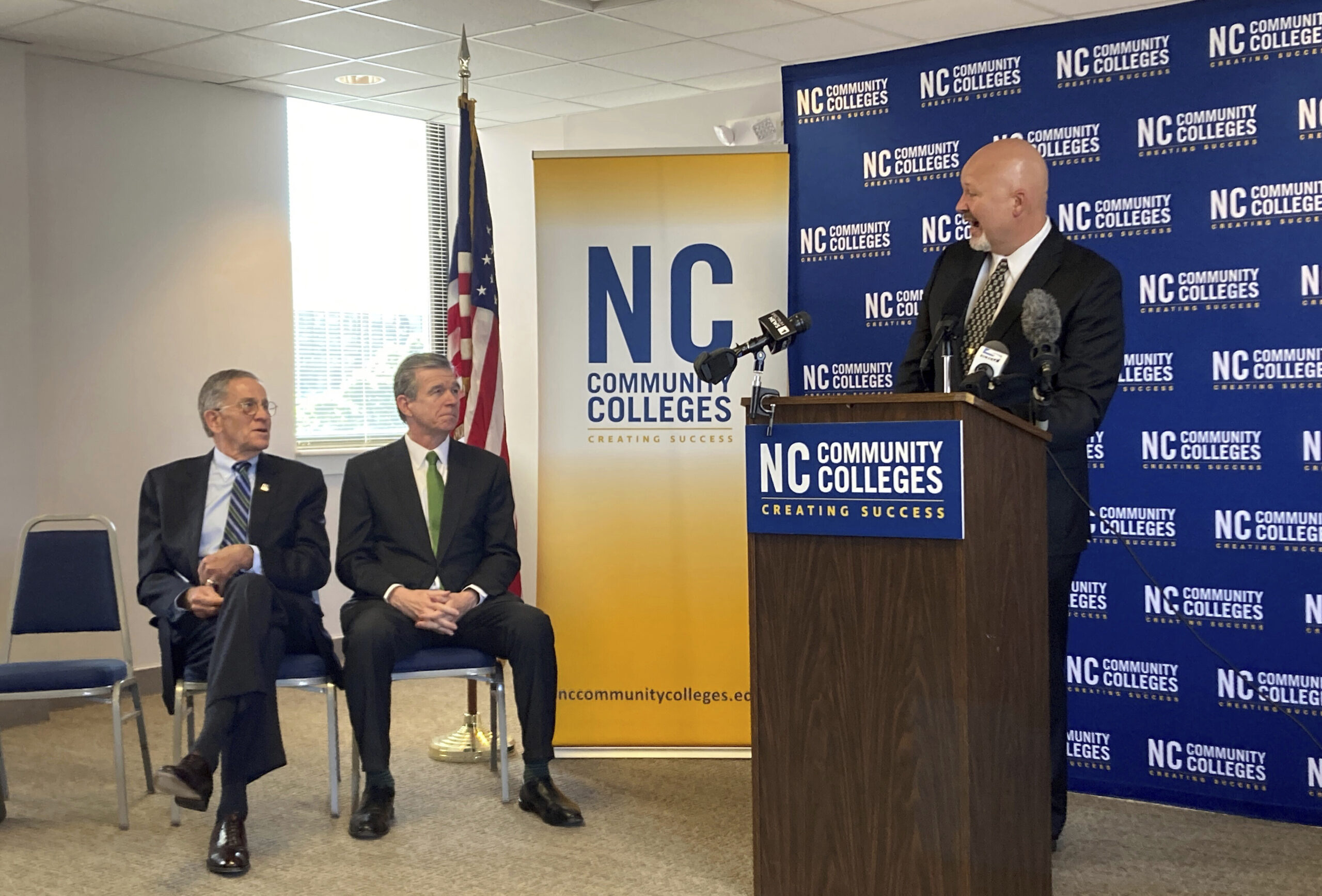
North Carolina Community College Head Aims To Fight PovertyWritten by GARY D. ROBERTSON The incoming president of North Carolina’s community college system pledged Monday to work to advance people toward economic success through post-secondary education that will also meet employers’ needs for high-skilled labor. Jeff Cox, the current president of Wilkes Community College, spoke at an introductory news conference three days after the state […]

UN Chief Warns Global Leaders: The World Is in ‘Great Peril’Written by EDITH M. LEDERER In an alarming assessment, U.N. Secretary-General Antonio Guterres told world leaders Tuesday that nations are “gridlocked in colossal global dysfunction” and aren’t ready or willing to tackle the major challenges that threaten the future of humanity and the fate of the planet. Speaking at the opening of the General Assembly’s […]
![]()
Extreme Poverty Rises and a Generation Sees Future Slip AwayAs a domestic worker, Amsale Hailemariam knew from the inside out the luxury villas that had grown up around her simple shelter of raw metal and plastic sheeting. And in them, she saw how her country, Ethiopia, had transformed. The single mother told herself, “Oh God, a day will come when my life will be […]
![]()
Why Wealth Gap has Grown Despite Record-Long Economic GrowthAs it enters its 11th year, America’s economic expansion is now the longest on record — a streak that has shrunk unemployment, swelled household wealth, revived the housing market and helped fuel an explosive rise in the stock market. Yet even after a full decade of uninterrupted economic growth, the richest Americans now hold a […]
One on One: North Carolina's Old Testament ProphetWhile I have been traveling up and down North Carolina’s roads in search of local eateries, UNC Law School professor Gene Nichol has been traveling the same roads looking for something else. I was gathering material for my book, “North Carolina’s Roadside Eateries,” and enjoying bountiful helpings of warm comfort food in the company of […]
![]()
UNC Study: Early Childhood Education Can Mitigate Effects Of PovertyResearchers say an early childhood education program called Educare can have a strong positive impact.
![]()
President's New Proposal Could Help Orange County KidsPresident Obama announced Wednesday he plans for ask Congress for $12 billion over the next ten years to help feed school kids during the summer. For low-income families, a free or reduced-price lunch is 5 meals a week for a child, but during the summer families can struggle to make up for those meals. Michael […]
![]()
Orange County Is Wealthy, But Poverty Still WidespreadOrange County's poverty rate is declining by some measures - but not by others.
![]()
North Carolina Ranks Low For Child WelfareLaila Bell, director of research and data at NC Child, says North Carolina’s modest economic recovery is doing little to help those who need the most.
›